
Microchipping your dog or cat
Take a look at our guide on microchipping your dog or cat.
Important
It's a legal requirement to microchip your dog and cat in the UK.
What is a microchip?
A microchip is a tiny computer chip that’s about the size of a grain of rice. It contains a unique code that matches up to your pet’s details, which are registered on an authorised database.
Microchipping a dog or cat is a quick and simple procedure, which takes seconds. The chip is inserted under your pet’s skin, usually around the scruff of the neck, using a needle. Once the microchip is implanted, it will last for your pet's lifetime.
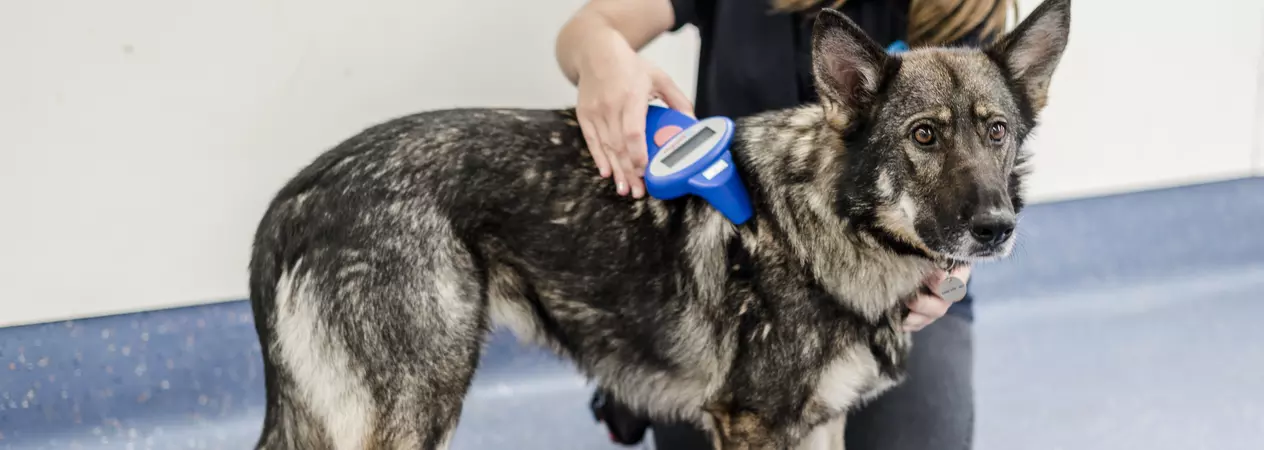
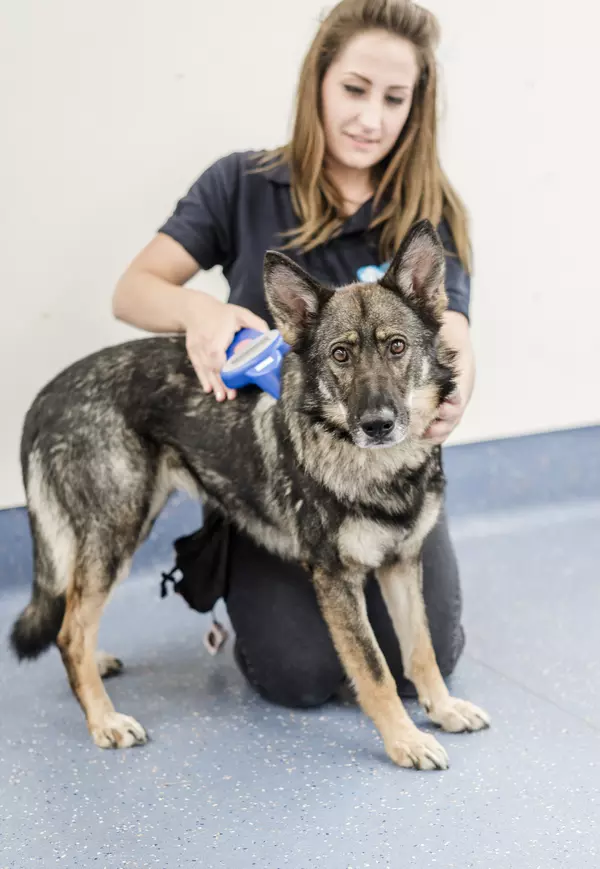
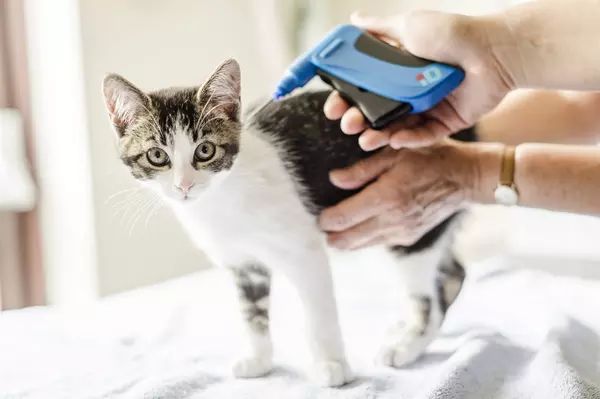
Your pet can be checked for a microchip using a handheld electronic device, called a scanner. When this is waved over their neck, the scanner will recognise the unique number held inside the chip. Keeping your pet's microchip details up to date will allow you to be contacted if your pet goes missing.
How much does it cost to microchip a cat or dog?
Depending on where you live, you can expect microchipping by a vet or vet nurse in the UK to cost around £10 – £30. You may also need to pay an additional consultation fee.
This cost usually includes placing the microchip and registering your pet on an authorised database. There may be a small fee if you change your details later on.
Why should I microchip my pet?
Each year we look after many lost dogs and cats who must have come from loving homes, but sadly, without a microchip, there is no way of reuniting them with their owners. Microchipping your dog or cat is important because:
- it's compulsory for dogs and cats
- if your pet gets lost or stolen, once found, they can be scanned and you'll be contacted
- microchipping makes your pet permanently identifiable, even if their collar or ID tag falls off
Important
It's important to keep your pet's microchip details up to date. If you don’t, the chances of you being reunited with your pet if they go missing are much lower.
Do cats have to be microchipped?
Yes, microchipping cats has been compulsory in England since 10 June 2024. This means that all cat owners or keepers (the person who the cat normally resides with) are responsible for:
- microchipping their cat before they reach 20 weeks old and ensuring their contact details are kept up to date and registered on a compliant database
- paying a fee of up to £500 if your cat is not microchipped and registered with a compliant database
It is not compulsory for farm or feral cats with little to no interaction with people to be microchipped.
Tip
Always make sure your cat is microchipped before you let them outside for the first time.
Do dogs have to be microchipped?
Yes, microchipping in dogs has been compulsory in England, Scotland and Wales since 6 April 2016. This means that all dogs must be microchipped under the law. You'll be required to:
- microchip your dog or puppy by the age of eight weeks old and have their details registered on a compliant database
- keep your contact details up to date on the database
- pay a fee of up to £500 if your dog is not microchipped and registered with a compliant database
Dogs in Northern Ireland are required to be microchipped as part of the conditions of the dog licence.
Note
As well as being microchipped, it is still a legal requirement for dogs to wear a collar and tag detailing the owner’s name and address when in a public place.
Microchipping puppies and kittens
Breeders must microchip puppies before they are eight weeks of age, which is usually before they go to their new homes. This means that the breeder must be the first registered keeper of the puppy, and they are breaking the law if they do not register the puppy by the time they are eight weeks old.
For kittens, they must be microchipped before they reach 20 weeks old, but most responsible cat breeders will microchip any kittens before leaving for their new home at around eight weeks of age.
Breeders should also pass on the correct microchip paperwork. It's important to transfer ownership and to register your puppy or kitten's microchip with your contact details when you bring them home. You can do this easily by contacting the microchip database company.
Occasionally, a vet may decide that the puppy or kitten should be microchipped when they are older and bigger. If this is the case, the breeder must give you a certificate signed by a vet to prove this, instead of the certificate of registration.
If a breeder has not microchipped and registered the puppy before you take them home, and cannot give you evidence to show the reason for the delay, you should consider finding a breeder that follows the rules.
Take a look at our advice on buying a puppy or getting a cat or kitten.
Will microchipping hurt my pet?
Microchipping is a quick procedure, but it does involve a needle and may be uncomfortable for your pet for a few seconds. To avoid any discomfort, you may want to ask your vet to place a microchip in your kitten when they are being neutered or spayed.
If you think your dog or cat has had a reaction to a microchip, contact your vet straight away.
Changing your pet's microchip details
As the registered owner of your dog or cat, it's your responsibility to keep the contact details on the microchip up to date. This includes changing:
- your name
- your address
- your telephone number or email address
- any changes to your dog or cat's name
Note
If you adopt, rehome or buy a pet, it is your responsibility as the new owner to update your details with the microchip database company.
To change your pet's microchip details, you will need to get in touch with the database that your pet's microchip is registered with. Depending on the database, you might be able to do this over the phone or online.
If you're not sure which database your pet is registered to, you can find this information by entering their microchip number into check-a-chip. If you don't know your pet's microchip number, your vet will be able to scan the microchip to retrieve these details.
Is it free to change microchip details?
This will depend on the database that your pet's details are registered with. Most microchip databases charge an admin fee of between £6 and £20 to change and update your pet's details.
For some databases, this will be a one-off fee which will cover all changes over your pet's lifetime. For others, this fee will be the same each time you change the details. You can check with your database to find out more.
Is my pet’s microchip proof of ownership?
No, a microchip alone is not proof of legal ownership. Under the Microchipping of Dogs (England) Regulations legislation, the person who cares for the dog and keeps them in their home is called a ‘keeper’, not an ‘owner’. The Microchipping of Cats and Dogs (England) Regulations 2023 states that a ‘keeper’ is “the person with whom the animal [cat or dog] normally resides.” This person has legal responsibility for their pet, but it does not prove legal ownership.
This means that your dog’s microchip must be registered to the ‘keeper’, who may not always be the owner.
To prove ownership, you may also be asked to provide other evidence including proof of purchase, veterinary records and insurance.
Page details
Reviewed
• 16 July 2026
Next review
• 15 July 2029