Can dogs eat cheese?: FAQ
You should feed your dog cheese in very small amounts, only as a treat.
Most cheeses are not poisonous or toxic to dogs and can be given in very small amounts, alongside a healthy diet. Blue cheese should be avoided as it can be toxic for dogs, and some cheese have added ingredients (such as onion, garlic or herbs) that could be harmful to your dog.
Important
If your dog manages to eat a large amount of cheese (such as a block), they may vomit. Keep an eye on them, and call your vet for advice if they become unwell.
Are dogs lactose intolerant?
As dogs age, their level of lactase enzymes decreases. This reduces their ability to digest dairy products. In some dogs, this means they will get symptoms such as vomiting, diarrhoea, bloating or stomach pain (much like a person with lactose intolerance).
If you think your dog may be lactose intolerant, speak to your vet for advice. You'll need to remove any traces of dairy from your dog's diet.
Which cheeses are unsafe for dogs?
It's best to keep your dog away from blue cheeses (such as stilton). This is because the fungus used to make these cheeses, can sometimes be harmful to dogs. It can cause vomiting, diarrhoea, high temperatures and even seizures in rare cases. While this is rare, it's not worth the risk of feeding blue cheese.
The risk of these symptoms is higher if your dog eats a large amount of blue cheese. If you notice any of these signs after your dog eats blue cheese, call your vet urgently.
Which dogs shouldn't eat cheese?
There are some dogs who should not eat cheese, even if it's a safe type of cheese:
- Overweight dogs. Cheese is high in fat so should be kept away from dogs who are overweight
- Dogs who react to cheese. Dogs that have an allergy or intolerance to dairy should not eat cheese at all.
- Dogs with sensitive tummies. If your dog struggles when they eat anything that isn’t part of their usual diet it’s best not to let them have any cheese as it could lead to sickness or diarrhoea.
Can cheese be used for training?
Lots of dogs find cheese irresistible, which makes it an ideal high value reward when training your dog.
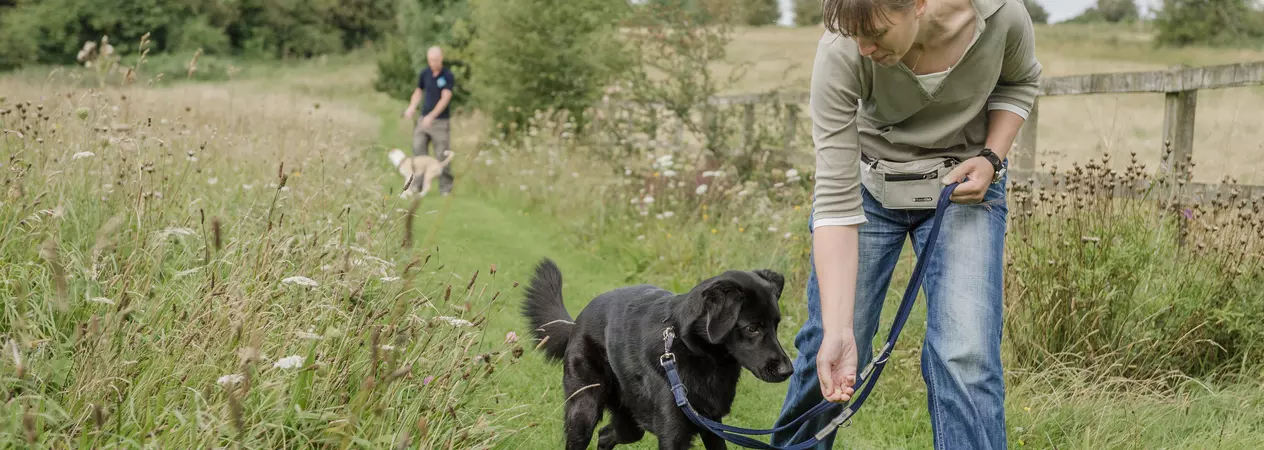
If your dog struggles with recall but finds cheese tasty, giving them a small piece of cheese when they return to you when asked will help them learn that coming back when called is a good thing. At Blue Cross, we use small cubes of cheddar cheese or cheese in a squeezy tube to train dogs at our rehoming centres.
Smearing cheese from a tube inside a Kong or on a lick mat can also be a nice calming treat for your dog, particularly if you’d like them to settle for a while. You can also try freezing this treat to make it last longer.
Page details
Reviewed
• 1 September 2025
Next review
• 1 September 2028