
Dogs with gut blockages
Dogs sometimes swallow objects which can lead to life-threatening blockages in their intestines. We guide you through the signs of a blocked gut and how to keep your dog safe.
When foreign bodies block your dog’s gut
Foreign bodies, such as toys and socks, can cause blockages inside your dog’s gut that can sadly be fatal if not removed in time. If your dog has a gut blockage, they need to be treated quickly.
What to do if your dog swallows something they shouldn't
Important
If your dog is vomiting and showing signs of abdominal pain, contact your vet immediately. Their condition can deteriorate very quickly and become life-threatening.
Symptoms of a blocked gut
If you think your dog has swallowed something they shouldn’t have, it might lead to a blocked gut.
Signs to look out for include:
- vomiting
- loss of appetite
- diarrhoea
- straining to poo
- tiredness
- yelping or growling when you touch their tummy
Give your dog the best chance of a successful recovery by seeing your vet immediately.
Treatment
Your vet might take an x-ray, an ultrasound and blood tests to confirm whether your dog has ingested a foreign object.
If surgery to remove the object is needed, your dog may require fluids and pain relief to support their recovery. They might also need to stay in overnight for monitoring.
In the past five years, Blue Cross has treated over 500 dogs who have ingested foreign objects, such as lolly sticks and toys.
A dog's curiosity left her needing emergency vet care
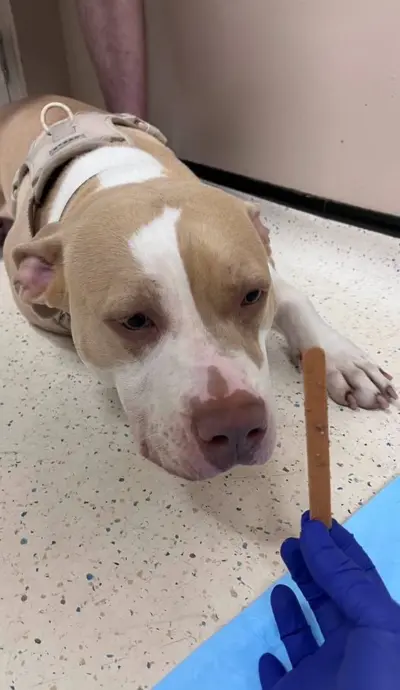
When Precious got her chops on an ice lolly during the height of summer, it put her life in danger rather than cooling her down.
As well as gobbling up the tasty frozen treat, Precious swallowed the wooden stick it was on whole, landing her at our Grimsby animal hospital as an emergency case.
Lolly sticks and barbecue skewers can be extremely dangerous, even fatal, for dogs if swallowed. They can cause choking, internal punctures and potentially life-threatening blockages in the digestive system. Thankfully, Precious’s owners spotted what she had done and knew she needed urgent veterinary attention.
Our vet team acted quickly, giving Precious medication to make her sick. Luckily, the wooden stick came back up completely intact, sparing her the need for potentially life-saving surgery.
A very lucky Precious was soon able to get back to enjoying life, happy and healthy - thanks to Blue Cross.
How to prevent your dog swallowing dangerous objects
- keep all small objects out of your dog's reach
- provide indestructible toys, and plenty of stimulation to prevent your dog from chewing inappropriate objects
- remove and replace any toys that become damaged
Common foreign objects that dogs usually swallow
Look out for these most frequently ingested objects and keep them well out of your dog’s reach:
- socks and other fabrics
- bones and corn cobs
- ribbon, thread, wool
- small stones and pebbles
- rubber bands and hair ties
- cocktail sticks
- lolly sticks
- BBQ skewers
- toothpicks
- batteries
- paint
- candles
- matches
- balloons
- shells
- curtain hooks
- paper clips
Why dogs chew
Dogs often chew to relieve discomfort, stress or boredom, or to gain attention. Some may also chew or eat unusual items because they aren’t getting the nutrients they need in their diet, or because of an underlying health issue. Understanding why your dog chews can help you prevent them from developing habits that could put them at risk.
Learn more about why dogs chew.
Help! Why is my dog chewing and eating everything?
It’s common for dogs to chew everything they see, and not everything they chew is a worry. However, it’s important to know what’s safe for dogs to chew.
Suitable chews
Give your dog safe, indestructible toys and remove and replace them when they begin destroying and eating the material.
Chews such as dental sticks, yak sticks and pressed hide are all safe to give your dog.
Page details
Reviewed
• 29 October 2026
Next review
• 19 October 2029