
Blue Cross Code: helping you and your horse stay safe
Follow our tips for horses and drivers, so we can all stay safe on the roads.
Horses and their riders are considered vulnerable road users, which means they’re at greater risk in traffic. That’s why Blue Cross is urging all drivers to slow down and take extra care when they see a horse on the road.
As prey animals, horses are naturally alert to danger. Even everyday sights and sounds like a loud engine, a flapping bag, or a sudden movement can startle them. When frightened, a horse may react unpredictably and try to flee, putting themselves, their rider, and others at risk.
While training can help horses become more confident in traffic, their instinct to escape perceived threats can still take over in a moment of fear. To help protect everyone on the road, we’ve created practical safety tips for both horse riders and drivers. Together, we can make the roads safer for all.
Staying safe as a horse rider
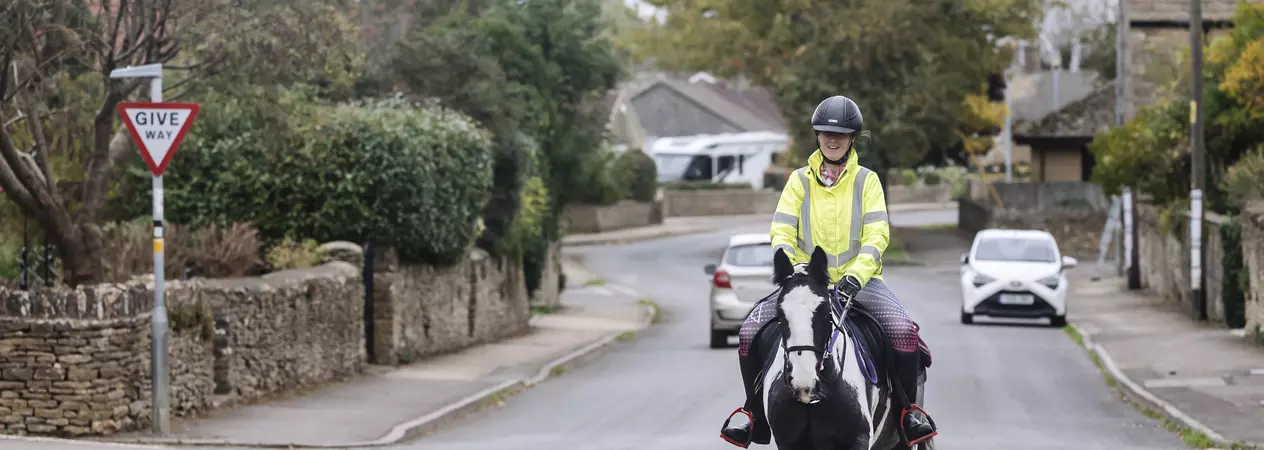
- Be visible – whatever the weather and time of day, wear high vis clothing. A tabard or vest for you and leg bands for your horse can help drivers see you more clearly.
- Use appropriate hand signals - make sure drivers know where you are planning to go
- Be alert – keep looking and listening
- Observe your horse – if your horse shows signs of stress, try to pull over and give your horse plenty of space and time to settle
- Thank drivers – a nod or wave to a driver is a fantastic way to encourage people to continue to take care when driving around horses
- Take a phone – just in case of emergencies
- Think ahead – plan your route and let somebody know when and where you are going, and when you are expecting to return
- Be patient – take your time to make your horse feel comfortable in traffic and praise their positive reactions. Going out with a more experienced horse or rider can also help boost your horse’s confidence.
- Consider the conditions – if you are worried about the daylight, weather or heavy traffic, it might be better to not go out on the road
- Find a course – consider taking the BHS Riding and Road Safety training and test or Ride Safe awards.
Staying safe as a driver
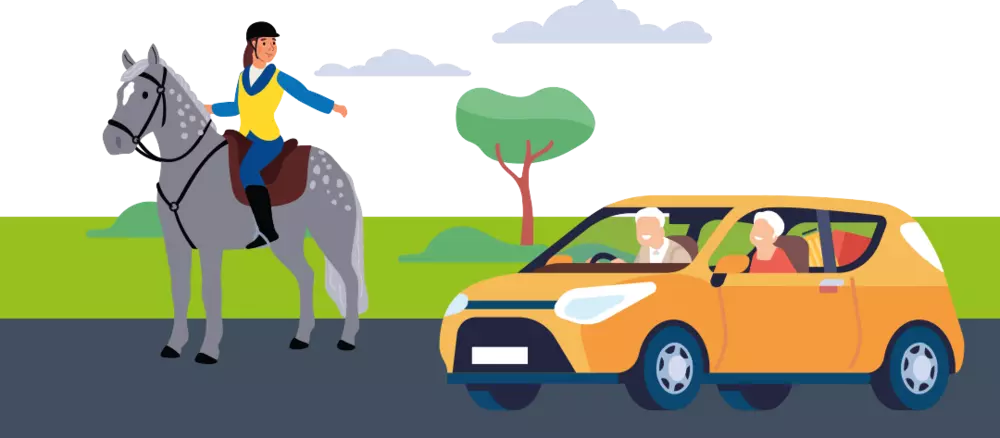
- Be patient – give the horse time and space. If you notice a horse becoming worried (such as jogging or looking tense) you may need to stop, turn your engine off and let them pass you.
- Know the code – make sure you are familiar with the Highway Code, particularly rules 214 (pass wide and slowly for animals) and 215 (pass wide and slowly for horses and horse drawn vehicles)
- Pass horses wide and slow – allow at least two metres of space between the horse and your vehicle, and drive no faster than 10mph
- Take your time when driving round bendy roads – you never know what's around the corner
- Stay vigilant – remember that horses are prey animals and will often bolt when frightened. Their behaviour can change quickly when scared.
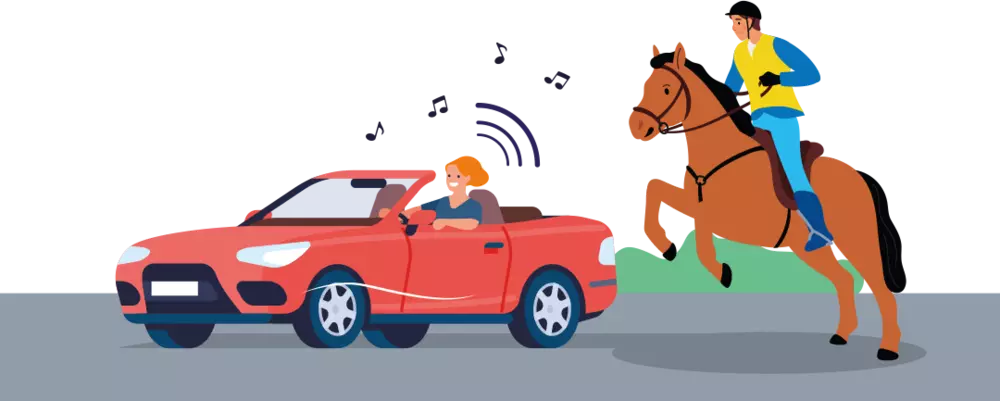
- Reduce volume – noise can easily worry a horse so don’t use the horn, turn down music if needed and drive slowly to reduce noise
- Give space – keep your distance in front of a horse as they have blind spots directly behind and in front of them
- Be aware of unridden horses – if you are driving around an area where feral and semi-feral ponies may be roaming such as the New Forest, Exmoor or Dartmoor, take extra care when driving, especially at night or in severe weather conditions as a pony could be in the road
What to do if an accident occurs
Call 999 if you need medical help. Make sure to tell them a horse has been involved in the accident. You should also report any incident involving a horse on the road on the BHS website.