

How to prepare your dog for fireworks
Preparing your dog well in advance of fireworks season can help them become more comfortable when the time comes. Find out how to get started and help your dog feel safe and supported when fireworks are going off.
When should I start preparing my dog for fireworks?
Firework sound training should begin well in advance of fireworks season, ideally from February onwards. Do not start this training shortly before or during fireworks season.
Training your dog to get used to the sounds of fireworks well ahead of Bonfire Night can help them feel less anxious.
However, introducing firework sounds without enough time to progress gradually could increase your dog’s fear and make their response worse. If there isn’t enough time for gradual training, focus instead on helping them feel safe and supported throughout fireworks season, and then begin training once it has passed.
Why do I need to prepare my dog for fireworks?
Dogs have excellent hearing, so loud bangs can startle and frighten them. Combined with bright lights in the sky and potential crowds, this can cause significant stress for dogs.
Although fireworks can be frightening for dogs, you can help prepare them for when the time comes and make the sounds less scary.
What you’ll need to prepare your dog
- A recording of fireworks - you can find one in our video below, on an app or on streaming platforms
- Speakers - for better sound quality and a more realistic experience
Before you begin the training, make sure you’ve listened to the sounds and experimented with the volume while your dog is out of the house. Start at a very low volume so the sounds don’t frighten or startle your dog.
Note
This training should only be carried out when there’s no risk of real fireworks going off - in other words, not during or close to fireworks season.
How to prepare your dog for fireworks
We recommend starting training around four to six months before Bonfire Night, so that you have plenty of time to get your dog used to the sounds.
If you have a puppy, you can start sooner as part of their socialisation plan. Introducing them to these sounds when they’re young can pay dividends throughout their life, helping them to remain calm when loud bangs are going off.
The longer you have to prepare, the better. If your dog already has a fear of fireworks, we recommend allowing even more time for training.
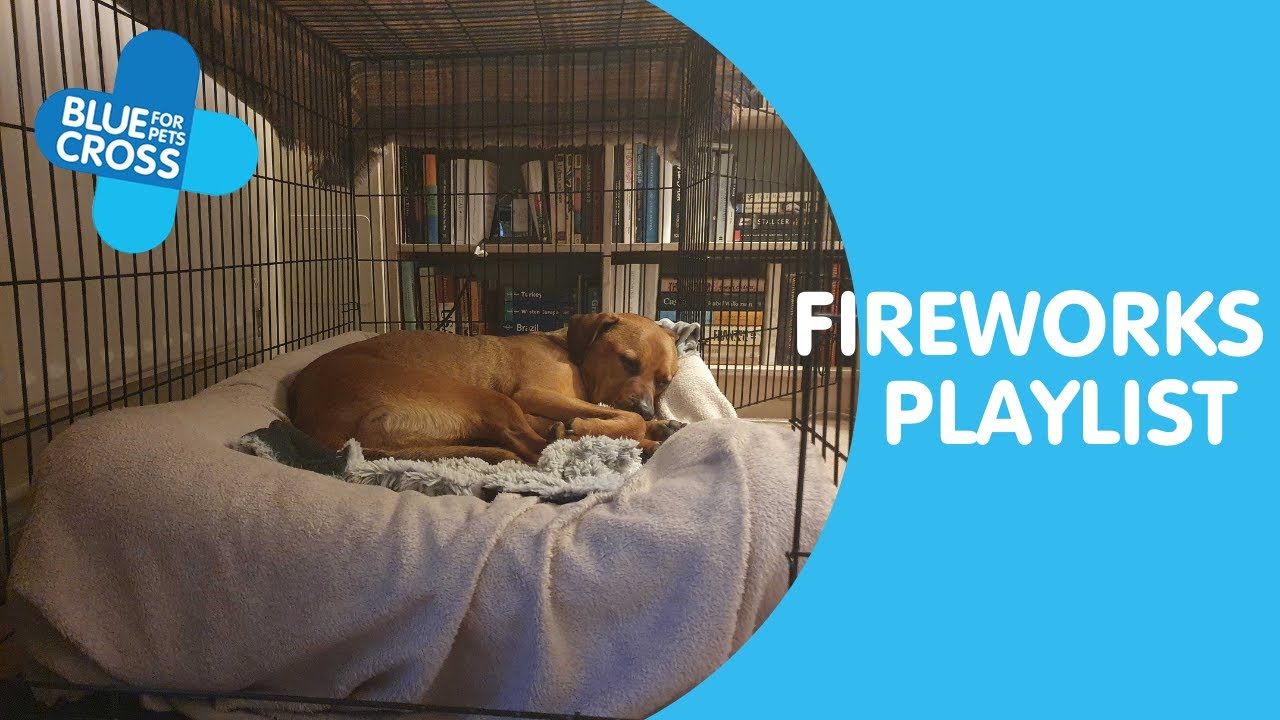
1. Start by playing the sounds quietly (barely audible) when your dog is relaxing
Your dog should hardly notice at first, aside from an initial ear twitch. Keep the sessions short (about one or two minutes is fine at first) and keep the volume the same for several days. Build up to playing the sounds to five minutes at a time, a few times a day.
2. Increase the volume gradually
Only increase the volume by a small amount when you are confident that your dog is not showing any concern. Make sure your dog is relaxed and calm. Continue increasing until the sounds are at a moderate level.
3. Introduce a chew or a Kong
Once you are happy that your dog is comfortable with the sounds, you can introduce a chew or food-filled toy such as a Kong straight after you begin playing the sounds. They’ll learn that firework sounds mean a tasty treat!
4. Keep going
Continue as above until your dog is comfortable with the firework sounds being reasonably loud. This may take several weeks to several months to achieve, depending on your dog. Remember, immediately after you press play, give your dog a long-lasting chew or a Kong.
5. Don’t be afraid to go back a step
If your dog stops eating when you are playing the sounds, it may be because they have become concerned about the noise. Reduce the volume to the level they were last comfortable with.
All dogs are individuals and will progress at different rates, so be patient and only increase the volume when your dog is ready.
6. When real fireworks start
It’s still important to prepare your dog and home for the actual event, even if you’ve prepared them well through training.
Real fireworks may be louder and could still startle your dog. During fireworks season, make sure you:
- walk them early, while it’s still light
- draw your curtains
- put on the TV or play music to help muffle the sounds
This training may not be suitable for all dogs, even if they’re new to fireworks. Some dogs are particularly sensitive to sounds or have had a bad experience with loud bangs. If this is the case, talk to your vet about contacting a qualified behaviourist through the Animal Behaviour and Training Council.
What if my dog is already scared of fireworks?
If your dog is already frightened of fireworks, always discuss this with your vet or behaviourist.
Every dog is different, and they’re likely to need an individual behaviour plan to help them prepare for fireworks.
Page details
Reviewed
• 16 November 2026
Next review
• 9 November 2029