

Lilly's story
Lilly was just five weeks old when she found herself in our care, unable to see and completely overwhelmed.
As she sniffs her way around our grassy puppy playpen with a wagging tail, Lilly looks like any other happy-go-lucky puppy.
But when she senses her foster carer backing away, she sits down and whimpers for her to return – showing just how vulnerable this sweet girl is.
The sable cocker spaniel puppy arrived at our Burford rehoming centre in Oxfordshire in February 2025 after the person who bred her realised that she was blind, so entrusted us with the task of finding her the specialist home and care she would always need.
Not only was Lilly unable to see, but she was also tiny for her age – weighing 2kg at a tender five weeks old – and was very lethargic and withdrawn, leading to concerns that she might be sick.
Leanne Fadden, Rehabilitation and Behaviour Advisor, explains: “We were very worried about her when she first came in. She was very flat and just a bit lifeless, so we were worried she was quite unwell.
“She was whimpering a lot if you left her side, like you just saw. So, she went straight to the vet.”
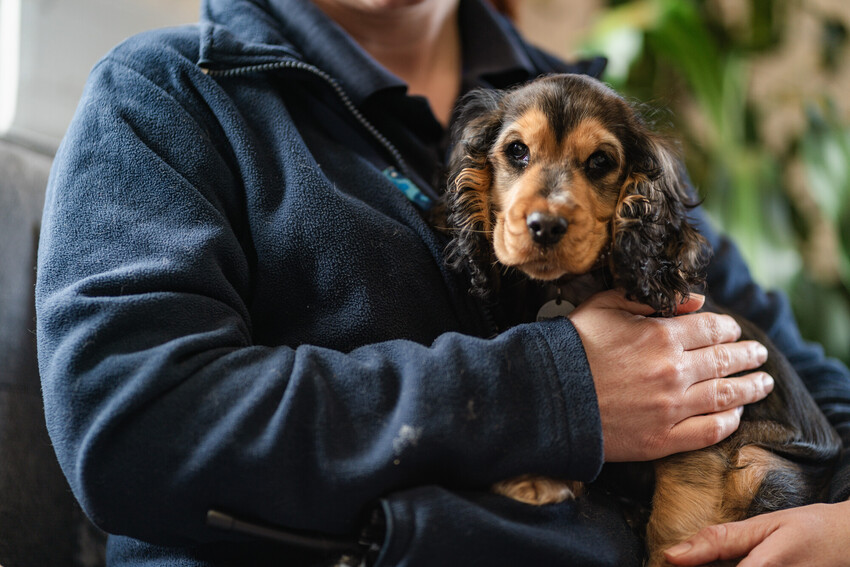
But after two nights on intravenous fluids to boost her strength, Lilly was given a clean bill of health – except for her blindness. Vets confirmed that she had no vision or promise of gaining any in either eye, likely caused by a congenital (from birth) condition. She also has cataracts in her right eye.
Cocker spaniels can be prone to several eye conditions that cause blindness, including retinal dysplasia, but genetic testing among parent dogs can help to reduce this risk.
Blue Cross was determined to give Lilly the very best shot at a happy, fulfilled life – and Leanne quickly stepped in to foster her and provide the expert support she needed.
Thanks to Leanne’s nurturing, Lilly was soon transformed from a shy and scared puppy to one showing a huge zest for life despite her disability.
Teaching her verbal cues to help the young dog understand the world and get to this point was crucial, as she so easily felt overwhelmed due to her lack of eyesight and her other senses being heightened.
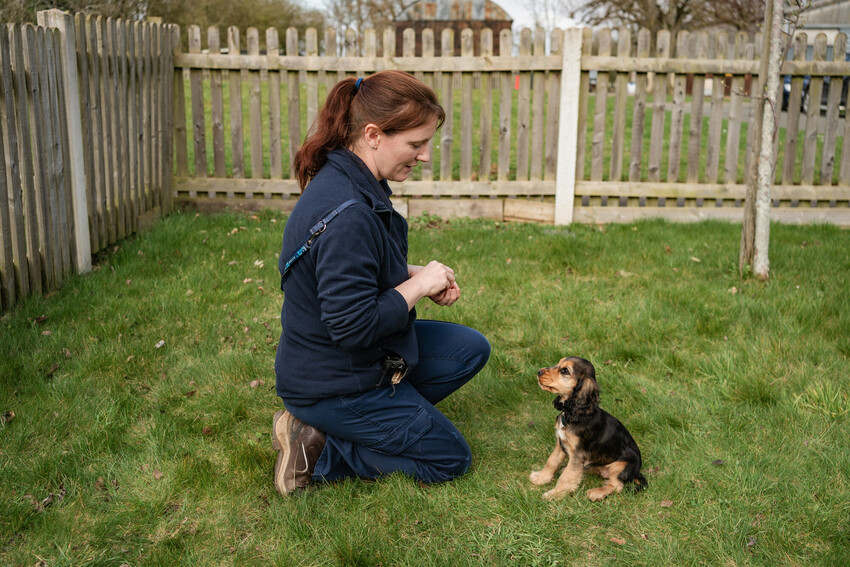
“Everything was put on a verbal cue,” says Leanne. “So, for example, when I pick her up, I’ll say: ‘Lilly, ready – up!’ so she knows what’s happening. And when I say: ‘dinner time’ she now knows exactly what to do and runs to her food mat, it’s so cute.”
Other cues Lilly learned in Blue Cross care included ‘careful’ so that she knows to slow down when nearing potentially tricky terrain on walks, and ‘goodnight’ accompanied by the radio being switched off so that she knows it’s dark and time for bed.
Meanwhile, Lilly was taught to navigate Leanne’s house with a network of different textured mats.
Leanne says: “We created a little bit of a map for her to navigate her way around, which led to different rooms and to her food bowl and bed.
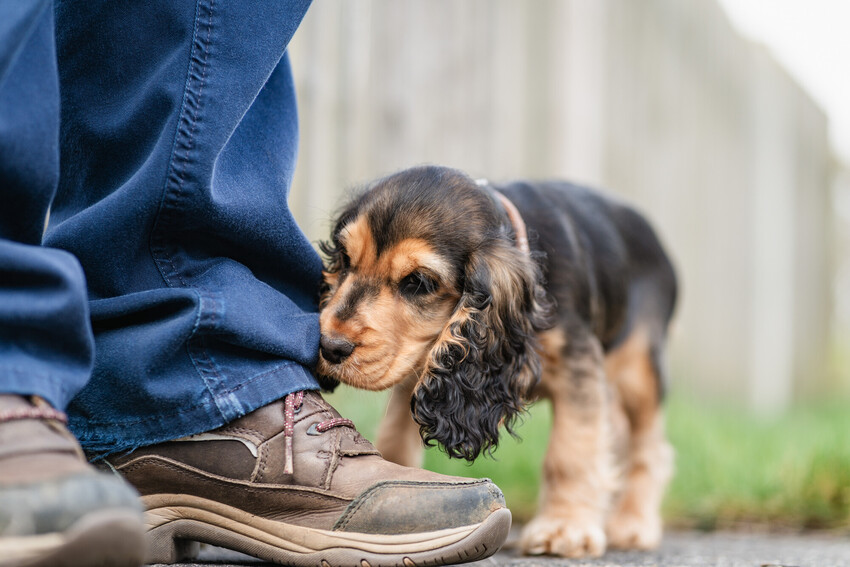
“At first, she stuck to this safe zone, but as she got more confident, she started to venture off the mats. She’d always find her way back to the mats to reset herself.”
Consistency was key, and her environment was kept free of obstacles which risked disorientating her.
“She soon started navigating her way around with ease,” says Leanne. “To the point that after a couple of weeks, you wouldn’t have even known she was blind. She became just like any other puppy, pinching washing off the line and tearing around the garden.”
Outside of the home and days spent back at the rehoming centre while Leanne worked, Lilly was easily overwhelmed by smells and noises.
As her paws could not touch the ground outside of the garden and centre playpen until she was fully vaccinated, Leanne carried Lilly outside for short five-minute spells to prepare her for future walks, which will always need to be on lead for her safety.
“She finds any longer than this too overwhelming so we knew this would need to be built up at her own pace in her new home,” says Leanne.

Lilly also found huge confidence in the company of Leanne’s dog, Lexi.
“Lexi has definitely helped to escort her around the house and gave her confidence out in the garden.”
Due to this, the team decided that a patient and calm canine companion – understanding of Lilly’s inability to read body language – would be a bonus when it came to rehoming her.
Leanne says: “We felt that she really benefited from living with another dog due to the confidence it brings her when exploring a home environment and then eventually having that dog out on walks with her.
“Obviously, the risk was getting it wrong. We couldn’t have another dog who is reactive to noises, for example, as it would startle her. So, it had to be the right dog.”
But, soon enough, the right dog – a dachshund called Barry – and the perfect family came along.
After 34 days in our care, Lilly started the next chapter of her life in the New Forest in Hampshire – taking with her the mats to help her navigate her way around her new home. And she continues to thrive.
Leanne adds: “Training her was fun and very rewarding. Seeing her get on with life despite her disability is quite incredible to watch. She’s an amazing little dog.”