
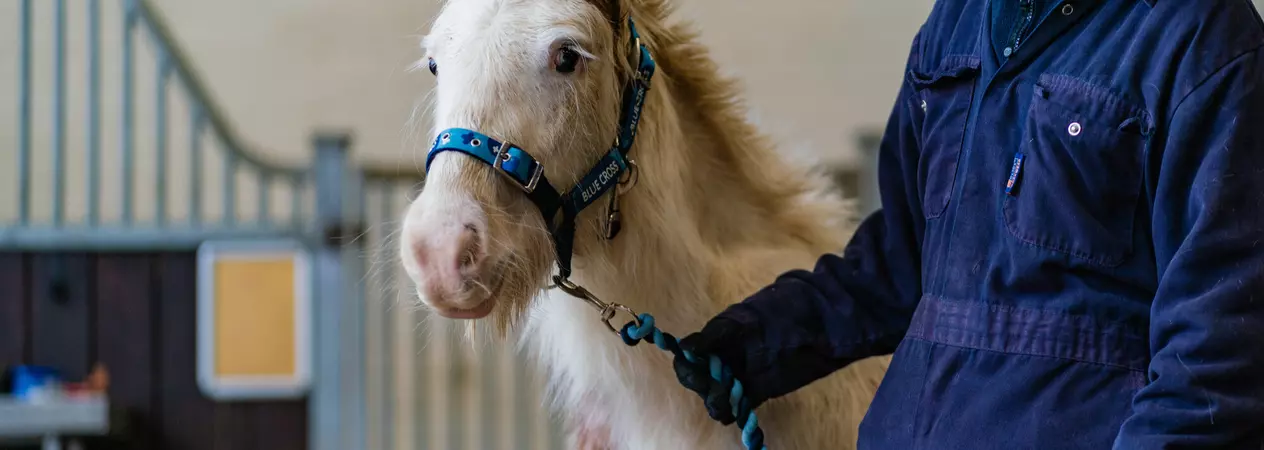
Severely malnourished horse recovers and thrives
Gregg was painfully thin when he arrived at Burford...
When Tufty Gregg, a two-year-old Cob colt, arrived at Burford rehoming centre, Jess Hall, Adoptions Preparation Lead, told the team not to grow too attached.
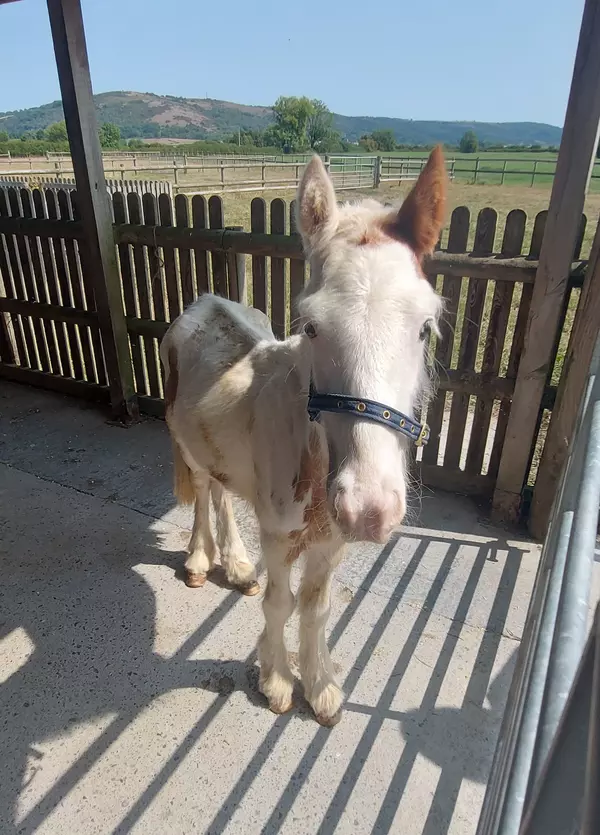
“We weren’t sure he’d make it,” Jess says. “He was so cute and fluffy but underneath that fluff really underweight – a one on the horse body scoring chart. He was so malnourished it was making him clumsy.”
Malnutrition can impair a young horse’s coordination by disrupting normal nerve, muscle, and bone development.
Without essential nutrients, the nervous system may function poorly, muscles weaken, and joints become unstable, leading to clumsiness, stumbling, and delayed motor skills.
Adoptions Preparation Rider Caroline Simpson, watched Gregg’s arrival, wobbling down the ramp from his horsebox into the yard at Burford.
“He was so tiny - like a newborn foal,” she says.
“We all fell in love with him but Jess, who admitted him, had warned us to be cautious.”
Gregg’s heart and respiratory rates were high which concerned our vet team too, suggesting the possibility of a high worm burden.
Gregg came to Blue Cross through a private rescue. A concerned horse lover, hearing reports of an emaciated pony – likely just days from death – in her area approached the owner asking to adopt him.
“We got the paperwork signed and Gregg, who was so weak he could barely stand, in the lorry before the owner could change his mind,” his rescuer says.
So the priority was to get Gregg on a diet that would ensure all his nutritional needs were being met and build him up enough to handle a dewormer. If he wasn’t robust enough, the treatment could cause life-threatening colic.
Two days after arriving, Gregg, just 10hh, was paired with Roe – a 15.2hh Hunter type horse.
“We paired Roe and Gregg together as they were both on special diets,” Jess says. “Gregg needed to be fed up and Roe the opposite – he had to lose weight. Their diets meant they couldn’t eat grass for a while so when the time came to reintroduce them, out in the fields, they could spend their time together.”
With hearty meals and a new pal, Gregg’s health improved. His heart and respiratory rates dropped while his body score rose to a two on the chart.
“He seems small for his age, which could be because he was malnourished in his early life, but horses can grow until they are around six years old so there’s plenty time for him to catch up,” Jess says. “He’s very easy-going and sweet-natured with people – he was even good with the farrier. Given everything he’s been through, he’s such a confident little pony. Everybody loves him.”
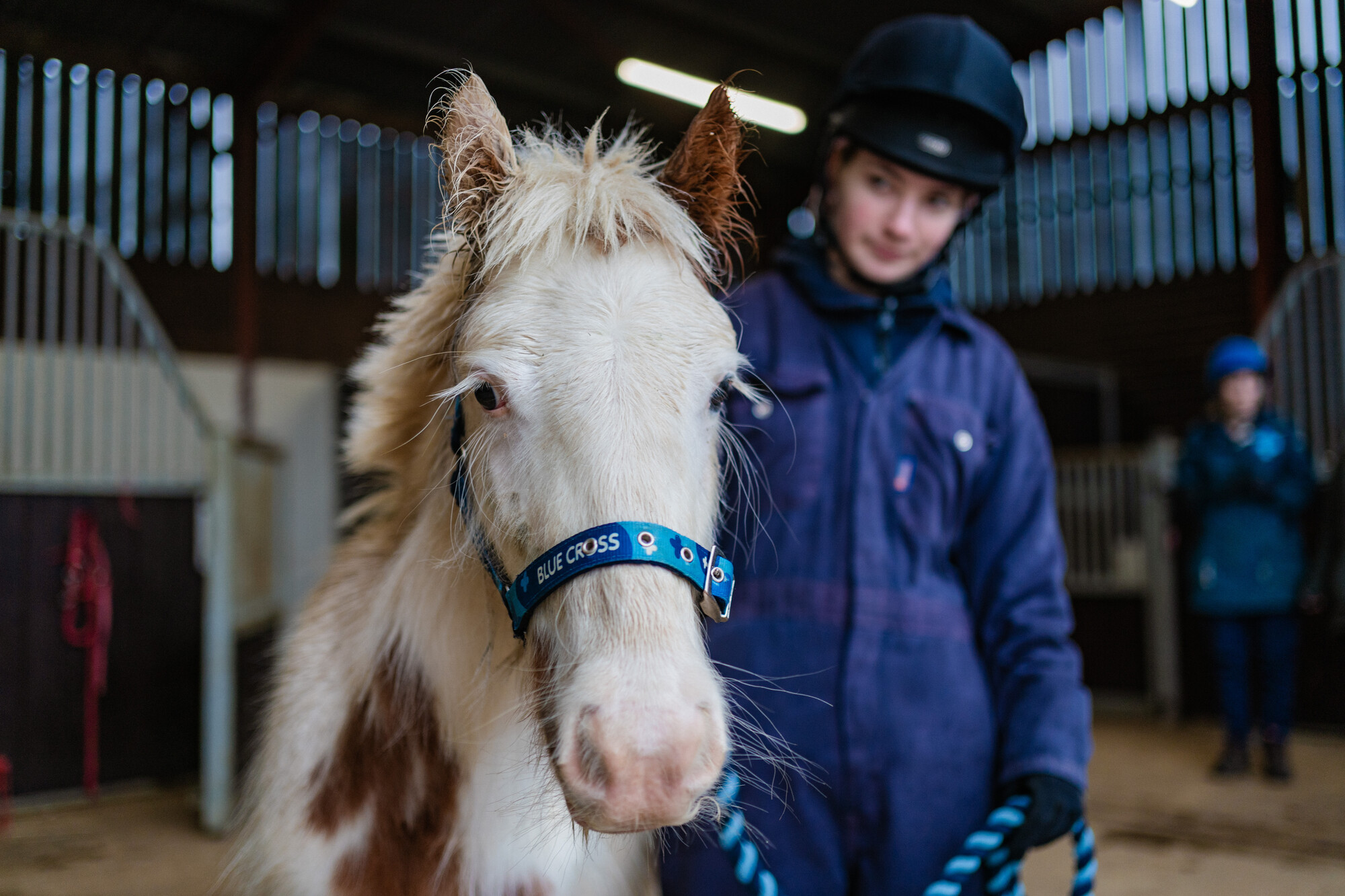
No one more so than Caroline who smiles: “We’re all obsessed with him – he’s just perfect. It’s ponies like Gregg that make working in the rain, snow and wind worthwhile.”
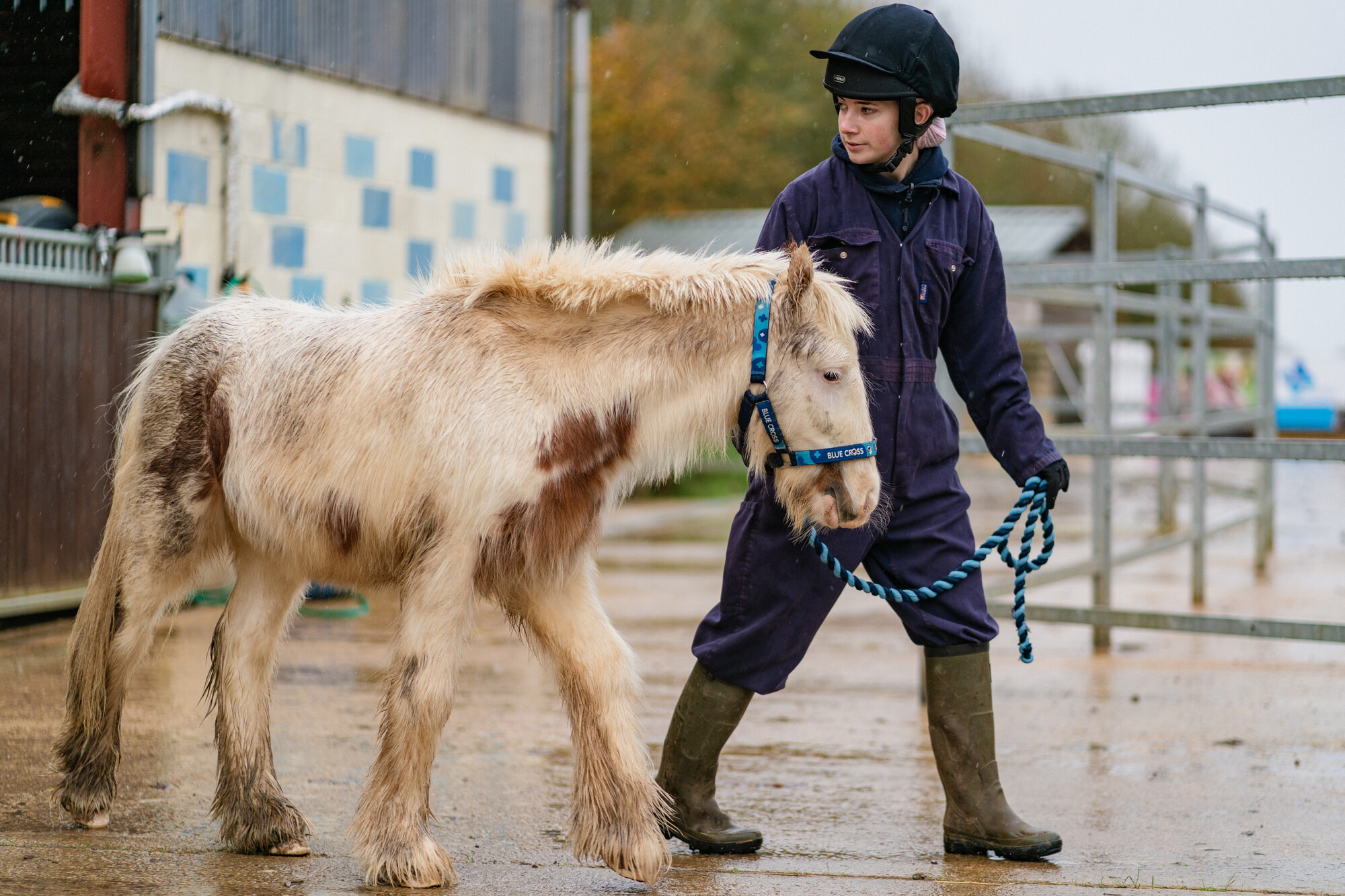
And forget about being clumsy!
“He has this big confident trot now,” Jess says. “I love watching him out in the fields."
So, after he’d recovered from castration surgery, it was time to find Gregg the all-round superstar his forever home.
“Our hope for Tufty Gregg is that he’ll go to a family where, when he’s old enough, he’ll be trained to be ridden as a child’s pony,” Jess says.
“I think he’d love to have that one-to-one connection with someone.”

