
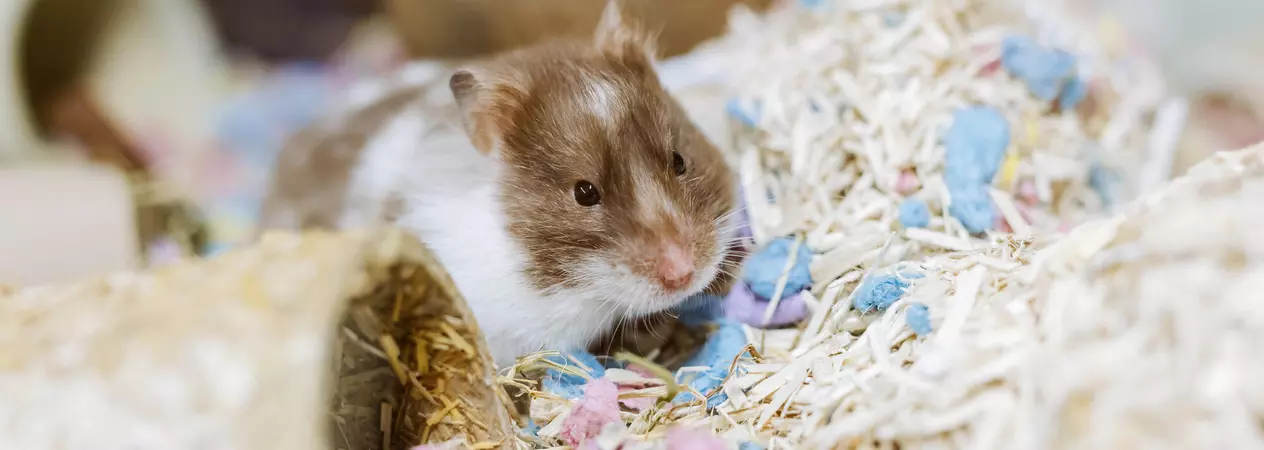
Stressed hamster thrives under expert care
Little Fawn now spends her days snoozing, burrowed snuggly beneath layers of deep bedding. At night, she explores the many enrichment options in her accommodation.
It’s a world away from her previous life confined to a cage a fraction of the size it needed to be – and without crucial opportunities to explore and play.
The Syrian hamster arrived at Blue Cross Hertfordshire terrified and showing signs of severe stress.
Naomi Gosheron-Parr, Adoptions Coordinator, explains: “She didn’t have the right accommodation in the previous home and had been overhandled.”
Our team put her straight in a spacious cage – the minimum size recommended is 100cm long and 50cm wide and tall – and soon found her a foster home, which we hoped would help Fawn settle.
But the now 10-month-old hamster needed extra support and had to return to the centre.

“She was climbing the bars and biting them, and seemed really unsettled”
“Burrowing is an important natural behaviour for hamsters, but they need deep bedding of the right type so they can build their tunnels where they feel safe and secure. Without enough deep bedding to dig into, hamsters get stressed and often begin to climb the bars and chew them.
“Pacing behaviours in hamsters show they’re very unsettled and stressed. And stress in small animals can really affect them long term.”
Even though Fawn had lots of bedding in her new cage, climbing the bars and biting them had become a habit, so she needed extra help.
Our behaviour team stepped in to help sweet Fawn, designing a bespoke setup for her in a glass tank. This included lots of layers of dust-free bedding, and enrichment activities for her to explore, such as wooden obstacles and food foraging.
To everyone’s relief, Fawn began to thrive – and started to burrow into bedding for the first time. And after two months in our care, she’s growing in confidence each day.
“This is the calmest she’s been – she was frantic when she came in. The fact that she is no longer pacing and has started to burrow is really positive.
“Added to the fact she’s resting in the daytime, which is what you want to see. Hamsters are nocturnal, so they should be sleeping during the day.
“It’s really rewarding to see,” adds Naomi.
Although she still cannot be handled, Fawn will now take treats from the hands of her carers and enjoys time out of her accommodation in a playpen filled with activities.
Naomi adds: “With the right, experienced owners she could potentially be handled in the future, though there’s no guarantee. We’ve noticed massive improvements already. The setup in her new home is going to be really important.”
Fawn has now been adopted by experienced owners, with help to set up her accommodation from the centre.

