
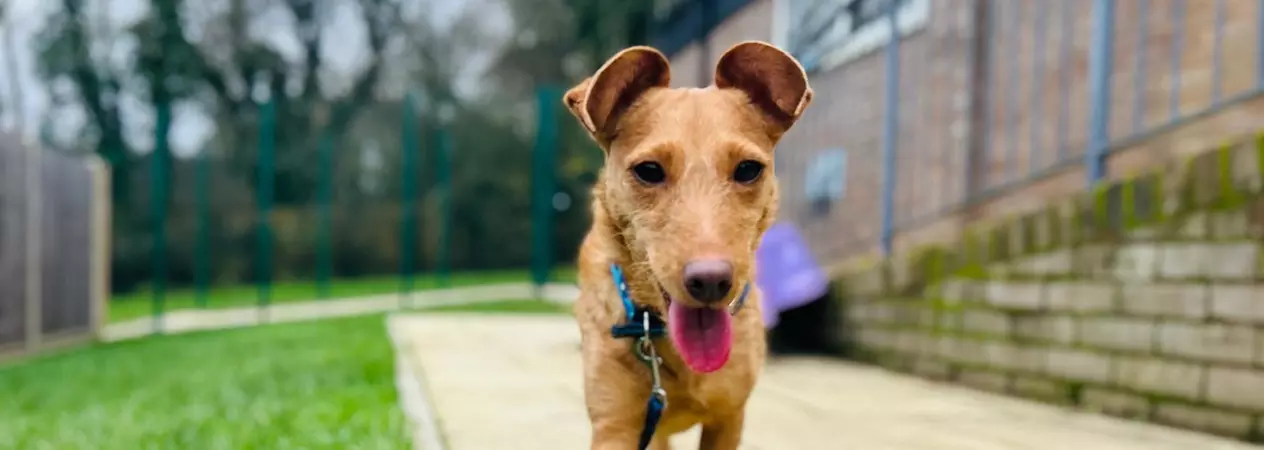
Terrified terriers transformed
From quivering shells hiding in the corner of their kennels to much-loved pets living life to the full, Duck and Goose’s transformations are nothing short of remarkable.
The terrier-crosses were abandoned outside the Royal Veterinary College in South Mimms, Hertfordshire, in September last year alongside a dalmatian called Zebra.
While confident Zebra was adopted in a couple of weeks, her two friends were petrified.
It would take our dedicated Hertfordshire rehoming team months to rehabilitate and rehome Duck and Goose – 88 and 96 days, respectively.
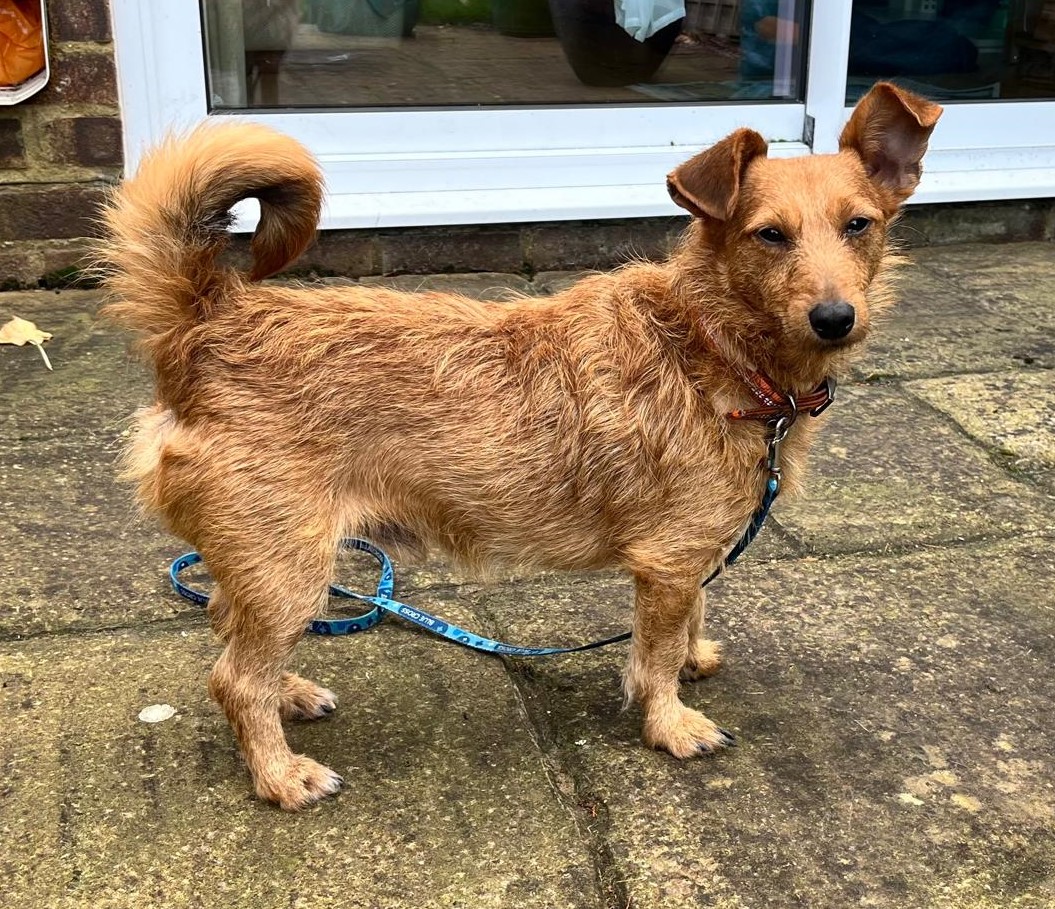
‘Flinching’
At first, neither could be touched. A collar and house line were placed on both dogs on their arrival, but they then hid at the back of their kennels for days, flinching if the end of the lead was picked up.
The male and female friends shared a close bond, but they had to be kennelled separately as they were not neutered. This further dented their already fragile confidence.
Lynsey Smith, Pet Welfare Assistant, says: “Duck was the most shut down. She was flighty and nervous, but Goose was also very shut down. For the first few days, they just stayed in their kennels.”
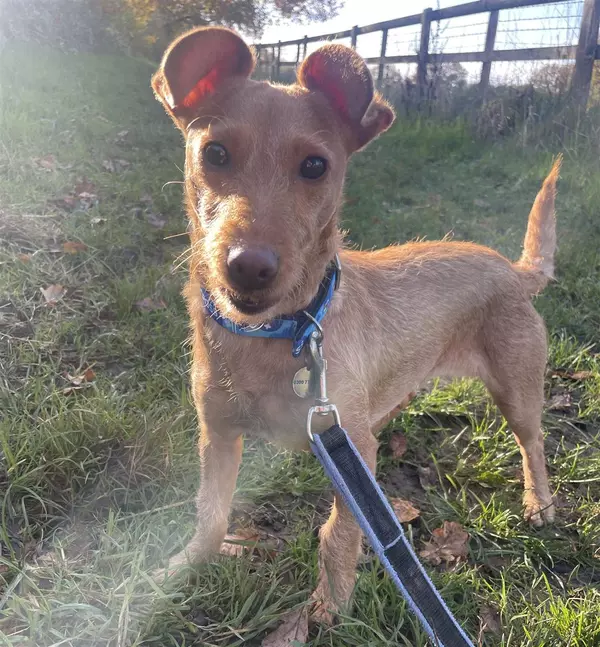
After a few days, by attaching a long lead to the end of nervous Goose’s house line, the team was able to lead him outside with reassurance from relaxed Zebra.
Slow progress
But Duck’s progress was even slower. “At first, we couldn’t even touch Duck’s house line,” says Lynsey. “If we did, she would just flee.”
Our team gradually built up time beside Duck’s kennel, speaking softly and laying tasty treats on the floor to teach her that humans could be kind. Eventually, she could also be led outside for supervised time with friend Goose.
“They were so much more relaxed when they were together,” says Emily Le Roux, Pet Welfare Assistant, and Duck’s main carer. “They would whizz around their run together like best buddies.”
“But you still couldn’t get in their space,” says Lynsey. “If you took a step towards them or accidentally moved a hand too fast, they would flee.”
Breakthrough
In the hope of a breakthrough, the team started target training on a platform as part of a careful plan set out by the Blue Cross behaviour team to build the pair’s confidence.
Rhona Nason, Rehabilitation Trainer and Behaviour Advisor, says: “This is where we gradually built a positive association – using lots of food – with the dogs stepping onto a platform and waiting there. We initially used this in the back of their kennels, and then we transferred this to the outdoor areas.”
Lynsey adds: “We spent hours just sitting there, putting bits of chicken on the raised bed and moving our hands a tiny bit in the hope they would get used to us and no longer flee.”
In time, this resulted in both dogs accepting the end of their house lines being picked up in the kennel – rather than having to attach another lead at such a big distance. This was a huge milestone.
“They never ever did anything bad; they just wanted to get away – they wanted to hide,” adds Lynsey.
Low pressure
As Duck and Goose grew in confidence, they spent more time in the team room to get them used to the sights and sounds of a home environment, which we don’t think they’d ever experienced before
“They wanted to be around people, but it had to be really low pressure,” Emily says. “Any pressure and they would panic.”
After six weeks, Goose was placed in foster care with volunteer Sue, who had already spent lots of time with him at the centre.
It was there that he started to accept human touch for the first time – an enormous turning point.
Sue says: “The first tail wag and gentle chest stroke were very special, and within a few weeks his cheeky personality developed. Goose and I had a real journey together where he learned how to be a normal dog, and it was incredibly rewarding for me. Goose will forever have a special place in my heart.”
Struggling
But Duck was still struggling. Eventually, she was put on anti-anxiety medication, and she slowly began to blossom in the same way that Goose did.
Finding friendship with fellow stray, Foxy the Pomeranian, who loved being around people, also helped.
Rhona says: “Although Duck loved going outside, she was still very fearful of being in close proximity to us and would visibly shake whenever we were close by.
“But gradually she started to wag her tail when we went to get her out and, by the team co-existing with her in the office, she started to feel safer in our presence.
“She also began to show more interest in being close to people when with Foxy. Once Duck started to feel a little more confident, she started showing her cheeky personality and would get so excited, bouncing around and squeaking when coming out of the kennel and seeing her handlers. It was so lovely to see.”
Happy endings
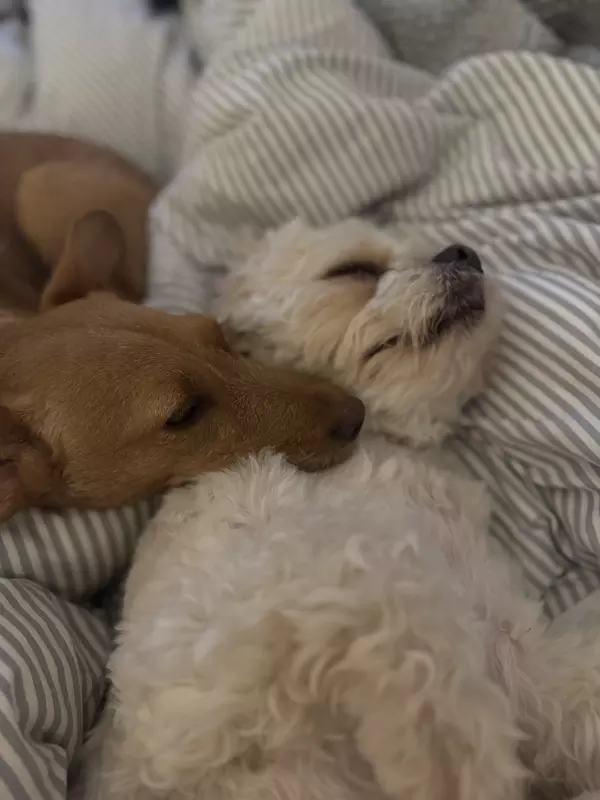
It took time, patience, and plenty of understanding, but after a couple of months, both dogs were ready to go up for adoption.
As Duck and Goose were growing more confident when apart, we found them separate homes with plucky new canine companions to show them the ropes in life as much-loved pets.
Both are now thriving.
Duck, now called Daffy, is described as a “proper goofball and very happy” by owner Hattie.
And Goose’s owner, Rachel, says: “His confidence has grown every day, and his playful, cheeky side is in full swing, stealing blankets, towels, and clothes at any opportunity.
“He is truly the perfect match for us and made our lives complete again after the loss of our beloved dog of 10 years.”

