
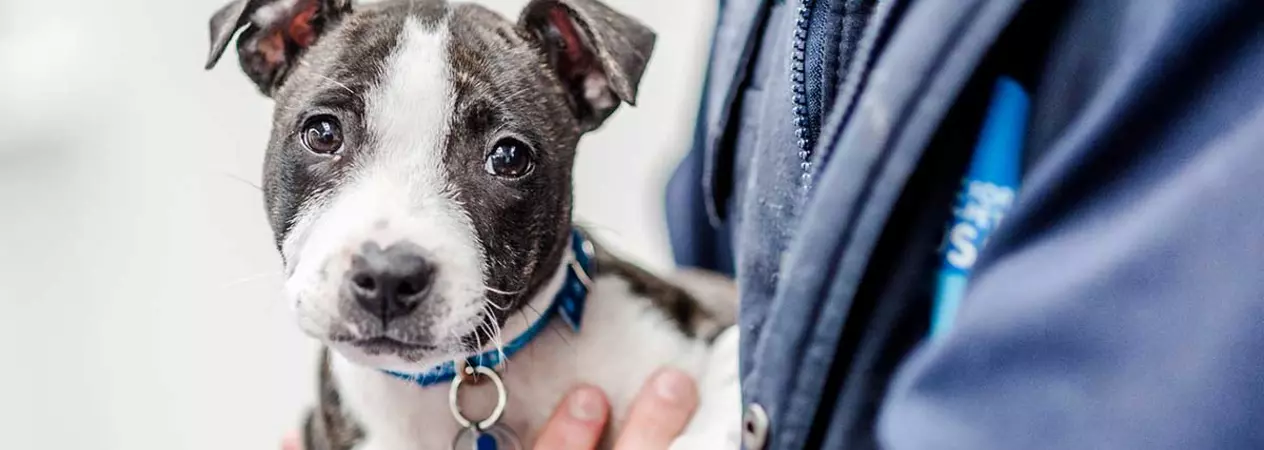
Puppy biting and mouthing
Learn why puppies mouth and play bite and how to teach your puppy to interact gently with people.
Why do puppies mouth and play bite?
Because puppies investigate the world using their mouths, it’s perfectly natural to expect them to nibble and bite people's hands, arms or clothing. They also use their mouths and teeth to find out how these important parts of their anatomy work.
Puppies will typically attempt to play with humans by mouthing and play biting. It is something they did with their siblings and probably their mum, and it’s a very normal part of learning how to interact with other dogs.
Some puppies, particularly those from working breeds, seem to play bite more or harder, and this is probably because they tend to be more energetic.
How long will this phase last?
For the vast majority of puppies, mouthing or play biting is a phase they will typically grow out of once they're three to five months old.
Try not to think of this behaviour as something that must be prevented entirely. Instead, think of it as something that will improve in a short period of time if managed well. Just like very young children going through challenging phases as they grow up, so puppies need our patience, support and guidance during this time to help them learn to treat people gently.
How to deter mouthing and biting
Redirect play biting and mouthing
Keep a variety of toys to hand with which to redirect play biting. If your puppy begins to mouth you, try not to move your hands away or make a loud noise, as this will excite your puppy and could encourage more vigorous play. Instead, gently transfer the puppy's attention onto a toy by shaking it, and encourage them to play with that instead.
Don’t be afraid to play fun tug games with your puppy. Large, soft toys are usually best for this, as your puppy will have a wide surface area to bite and be less likely to grab your hands by mistake.
For some puppies, providing them with an outlet for play biting or mouthing will be enough. It may take a few weeks of consistent redirection, but they will learn that playing with or chewing toys is satisfying - and will be far less likely to mouth people.
Learn what triggers your puppy to mouth
It’s often helpful to write down the times and events that trigger the behaviour - this way you can do your best to have a distraction ready for your puppy to minimise their behaviour. This might be playtime with toys, a training session or a satisfying walk to tire them out. For tired puppies, you might want to offer a long-lasting chew if they need some downtime.
Take away temptations
Wearing loose clothing, fluffy slippers or a belted dressing gown can make you an irresistible target to your puppy, especially if they flap as you walk around the house!
Until your puppy has learnt how much fun he or she can have with toys and has less desire to play and tug on absolutely everything, you might want to rethink what you wear!
Keeping children safe around mouthing puppies
If you have children, puppy mouthing can be a real challenge - it's difficult for children to stay calm when a puppy starts biting them!
Puppies have sharp teeth, and children shouldn’t be expected to manage play biting on their own. Their reactions may even encourage the puppy to mouth more.
It’s important to supervise interactions closely and manage them carefully. If you can’t supervise, keep your puppy and children safely apart. Stair gates and crates can be useful for creating separate spaces.
The benefits of regular rest, meals and exercise
Make sure your puppy gets enough rest
Puppies need a lot of sleep, often more than they seem to realise! Like babies and young children, they can become excitable or irritable when they're overtired, which may trigger play biting. If your puppy struggles to settle, you may need to schedule quiet time throughout the day to help them switch off.
Feed your puppy regularly
Make sure your puppy gets the right amount of food for their age. Puppies have small stomachs and need several meals throughout the day. Just like people, they can become irritable when they're hungry, which may lead to mouthing.
Keep your puppy mentally and physically stimulated
Puppies need plenty of opportunities to play, run, explore and learn about the world around them. It's important to meet these needs without over-exercising your puppy for their age and breed. A bored or under-stimulated puppy may be more likely to play bite, so make sure they have a good balance of activity, enrichment and rest.
What if all of this doesn’t work?
Give your puppy a short break
If your puppy keeps play biting, you may need to give them a short break from interacting with you.
You could try attaching a lightweight dog training lead (also known as a house line) to your puppy’s harness before play begins, so you can calmly guide them to a nearby, safe area separated by a stair gate if they bite hard. This avoids having to handle an excitable, mouthing puppy. Never leave your puppy alone while wearing it a training leash.
Keep breaks short and calm
If your puppy bites hard, calmly guide them to the separate area for a brief break. Once they’ve settled, let them re-join you. If they bite hard again, repeat the process. Avoid using their crate for this, as this should remain a safe, comfortable place to rest.
Be patient
Over time, your puppy should learn that biting hard brings play and attention to an end. Keep following the other tips for helping your puppy through this phase, and look for patterns in when the mouthing happens. Your puppy may be tired, hungry or overexcited.
Remember that puppies have good days and bad days, and their behaviour won't always be perfect. Try not to get disheartened by setbacks. With patience, consistency and the right support, most puppies learn to interact more gently as they grow.
Things to avoid when teaching your puppy not to play bite and mouth
- Don’t encourage play biting with fingers. As cute as it might seem when your puppy is small, you really don’t want your puppy growing up thinking that biting is an appropriate way of interacting with people.
- Avoid using high-pitched squealing or similar noises in an attempt to let your puppy know they have hurt you – this tends to excite puppies, which can often encourage more biting.
- Don’t tell your dog off. Although it might be painful when your puppy play bites you, you don’t want to frighten them as they may begin to lose trust in you. It’s better to expect and anticipate mouthing episodes, and then manage them in a safe and helpful way.
Teething can make puppies’ gums sore and increase their urge to bite and mouth things. Provide suitable chew toys, chews or puppy teething rings to help soothe their gums and give them an appropriate outlet for this natural behaviour.

Dogs and chewing
Dogs and chewing


