
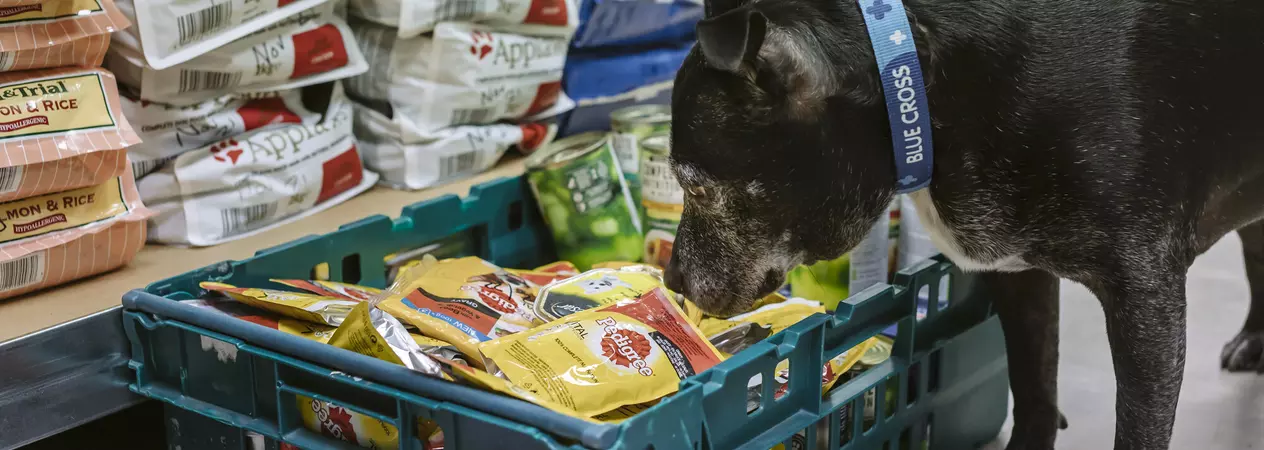
How to use our pet food banks
Answers to frequently asked questions
Blue Cross receives pet food through various channels and distributes it to partner food organisations, as well as our own pet food banks. If you need pet food, please use the link below to find one of our partners who may be able to help you.
Pet food selection FAQ
You're welcome to take any pet food that we have in stock. But because our pet food banks rely on donations, we can’t guarantee we have a particular brand. This applies to types like grain-free pet food as well.
We can usually cater for senior pets or puppies and kittens. But we’re generally unable to help with prescription diets. Speak to your vet about any lower-cost alternatives.
Yes, if it says “complete” on the label. By law, pet food companies must ensure any food labelled as “complete” gives a nutritionally complete and balanced diet for the relevant species. Food labelled “complementary” only provides part of the nutrients your pet needs to be healthy.
Changing your pet’s diet FAQ
A change of diet might cause digestive problems. Introduce any new food over a few days. Mix a quarter of the new food with the old food on the first day and gradually increase the proportions each day until you have switched over completely. Cats may take longer to adjust from moist to dry food. Try soaking the dry food to encourage them.
Spread out dog food labelled “complete” over a long period, so your dog has some nutritional food each day. Bulk it out with rice, pasta, water-soaked oats or cooked potatoes. You can also add cooked egg, plain cooked meat and boiled veg such as carrots or broccoli. Avoid salty, spicy or fatty food and never feed bones.
Please note this advice is for emergency situations only. Pursuing it long-term can lead to serious health problems, particularly for puppies.
Make sure your cat has some animal protein such as cooked meat or fish. Cats need to eat meat. You can spread out cat food labelled “complete” over a long period by mixing it with cooked veg or rice. That way, you ensure your cat has some nutritional food each day. Don’t bulk it out with salty, spicy or fatty food, or bones. And remember cats are more likely to eat new food if you warm it up a bit.
Please note this advice is for emergency situations only. Pursuing it long-term can lead to serious health problems.
Give their digestive system a chance to rest for 24 hours by feeding them small amounts of cooked chicken, scrambled egg, plain rice or pasta. After the 24 hours has elapsed, try the new food again in very small amounts.
Stomach upsets are often caused when new food is introduced too quickly. So introduce it slowly over a few days.
If your pet is healthy, give them 48 hours to eat the new food. Try mixing it with their previous food. Add flavour by including a tiny amount of Marmite or tinned pilchards. Warming up the food a little will bring out flavour too. Don’t give your pet any treats during the time you’re introducing new food.
Pet food in special cases FAQ
Not long term. A cat could eat dog food and be okay. However, if a cat is fed dog food over any length of time it will suffer from serious deficiencies in essential nutrients. This may cause long term health issues such as blindness and heart disease.
A dog can eat cat food and be okay. However, cat food is higher in protein than dog food and can cause digestive problems. So, it's not advisable for any length of time.
It's not ideal for puppies or kittens as they need a balanced diet to help them grow. However, an adult dog or cat will be okay for a couple of days as long as you avoid salty, spicy or fatty food and never feed them bones.
Sparingly so. Treats are not a complete diet and can be high in fat. If you need cheap treats for pet training, use tiny amounts of flavoursome human food such as Marmite or crumbs of cheese (pea-sized or smaller).
More help with the costs of pet care
Get help and advice on how to care for your pet on a budget.

