
How to crate train your puppy
A crate can be hugely beneficial for a puppy settling into a new home. It provides a safe, comfortable space where they can relax and take some time out when they need it.
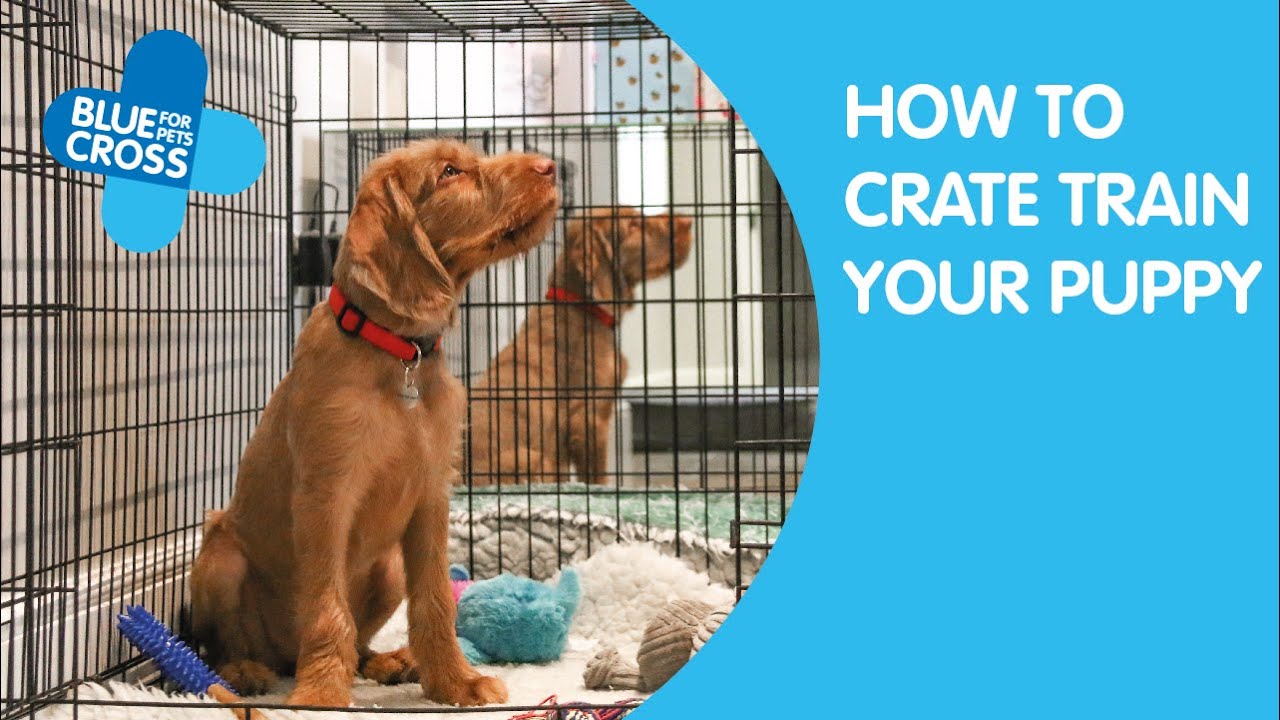
Choosing your crate
- Wire crates are better for pups than material ones because of the risk of tears from their needle-sharp teeth.
- The crate should be a pleasant place for your puppy to be, so will need to be big enough for when your puppy grows up, with space for food, water, bedding and toys.
Introducing your puppy to a crate
Getting your puppy familiar with their crate is hugely important. The puppy should see it as a positive place to be, so being in a crate should never be used as a punishment.
Step one: prepare the crate by placing a comfy bed, blankets, water and toys inside it. You can also add a blanket over the top, for extra cosiness and to reduce any draughts.
Step two: leave the door open and allow the puppy to go in and out of their own accord, until they seem comfortable with it.
Step three: gradually start to close the door for a few seconds at a time when your puppy is in the crate. Slowly build up the length of time the door is closed.
To encourage your puppy to relax in their crate, give them a long lasting chew or Kong toy to enjoy while they're inside it.
If a crate is introduced slowly, they are a great addition to helping your new puppy feel at home. Downtime is as important as socialisation time, so a crate can be a great place for your puppy to sleep and relax without being disturbed.
If a crate is introduced slowly, they are a great addition to helping your new puppy feel at home. Downtime is as important as socialisation time, so a crate can be a great place for your puppy to sleep and relax without being disturbed.


— Page published 02/05/2019