
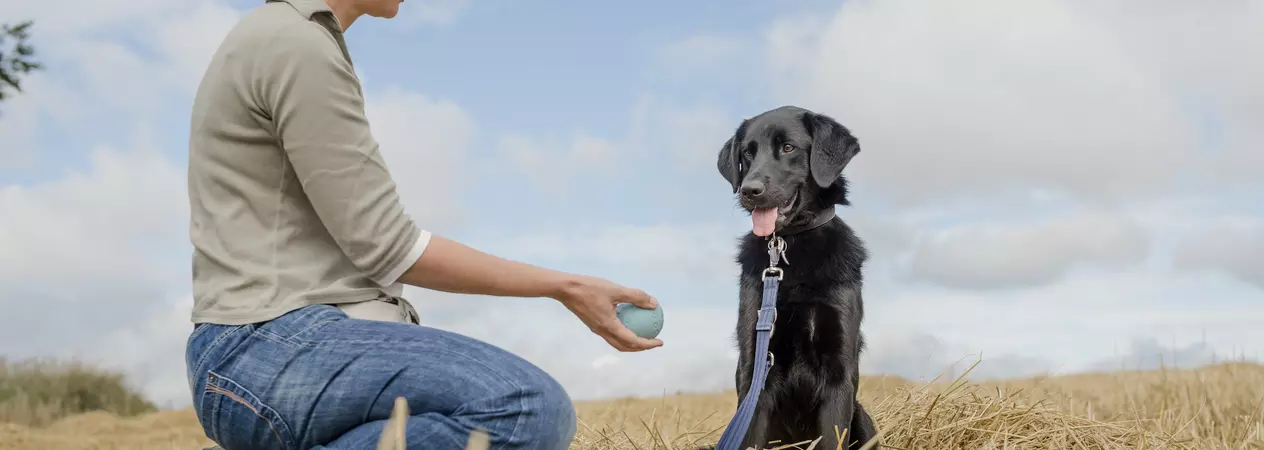
Dog and puppy training
Training your dog has many benefits, whatever their age. Even teaching them a few basic commands can make everyday life easier and more enjoyable for you both.
You may have big ambitions to teach your dog lots of skills and tricks, or you may just want to ensure they come back when called. Whatever your training plans, there are many advantages:
- Having your dog respond to requests (such as stay, sit and come) when you need them to, can make walks more enjoyable
- Dogs enjoy training. The mental challenge of learning new things can be stimulating and a good use of their energy.
- A dog that walks on a loose lead is far more enjoyable to walk
How dogs learn
Dogs learn by association. If your dog does something and gets a reward, they’re more likely to repeat that behaviour.
During training, reward your dog as soon as they do something you like. This helps them understand which behaviour you want them to repeat. Once they’ve learnt the action, you can introduce a cue, such as saying “sit” when they sit down.
Note
Blue Cross recommends positive, reward-based training. We don’t use or recommend aversive equipment or methods, as dogs learn best when they feel safe and relaxed, rather than stressed, worried, uncomfortable or scared.
Blue Cross recommends positive reward based training methods. We don’t use or recommend methods or equipment that cause dogs pain, discomfort or fear - dogs learn best when they are not stressed, uncomfortable or scared.
What rewards should you use?
Before you start training, think about what your dog enjoys most. This will be their reward for learning new skills. Many dogs love food, but you can also use toys, praise or a fuss.
Food treats are often helpful when teaching something new, as they can help your dog focus. Choose a reward your dog finds tempting. For some dogs work it may be small pieces of a tasty treat, such as chicken, ham or cheese. Others may be happy to work for their usual dog food, especially if they have a good appetite.
Note
Depending on how much training you do or how active your dog is, you may need to adjust their food portions to ensure they do not become overweight.
Using a reward marker
When training, it’s helpful to use a reward marker. A marker is a signal to your dog that what they did at that moment was correct.
Verbal markers (such as “yes” and “good”) are commonly used, as well as mechanical markers such as clickers. If your dog is deaf or hard of hearing, a visual marker can be used, such as a thumbs up.
To help your dog understand what the marker means, you’ll need to pair it with a reward (such as food or toys). The aim is for the marker (verbal, sound or visual) to indicate that a reward is on its way. This really helps with training, as you can be more precise and also mark behaviours when your dog is further away from you.
How to pair the marker and reward
Choose a marker, such as saying “yes”, using a clicker or giving a thumbs-up signal for deaf dogs. Give your dog a treat immediately afterwards.
Repeat this around 20 times. Your dog will learn that the marker means a reward is coming. Once they understand this, you’re ready to start training.
Note
The reward marker should not replace the reward when training. It’s simply a tool that helps to make your training more precise, especially when your dog is learning something new.
Things to remember when training your dog
- Training together should be fun. If you’re teaching something that your dog finds difficult, pause on a good note and try again later - it can be easy for you or your dog to get frustrated during training. Use the time to figure out what the problem is so you can make it easier for you both next time.
- Keep sessions short (about two to five minutes) and practice whenever you can. Little and often is best.
- Practise in different areas, for example in the house, out on walks and in the garden. Remember to keep distractions to a minimum in the early stages of learning anything new.
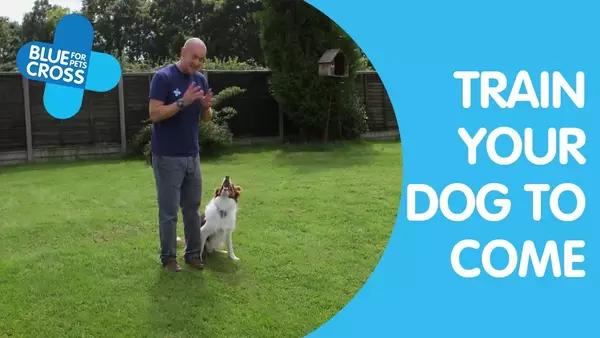
How to teach your dog recall
Recall is one of the most important skills you can teach your dog. If you let your dog off the lead, a reliable recall can help keep them safe. It’s also useful if you accidentally drop the lead or someone leaves a door open, helping you call your dog back before they get into danger.
It’s best to start recall training as early as possible, but it’s never too late to teach your dog to come back when called.
How to get your dog to sit
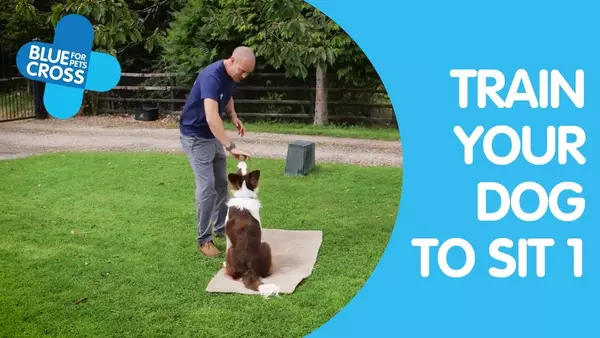
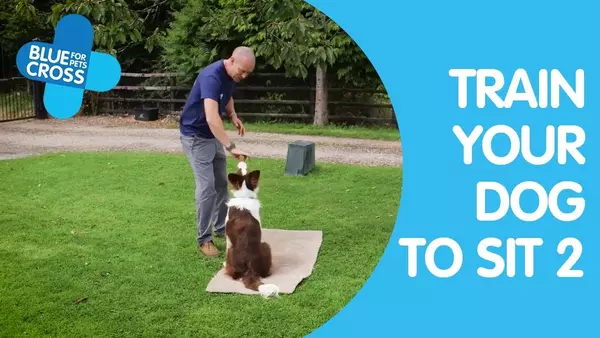
- Get your dog into position with a treat just above their nose, then move your hand over your dog’s back.
- As your dog’s head tilts up and back, your dog will sit. As your dog sits, say “yes” or click and give them a treat. If the reward is held too high or moved too quickly, your dog may jump up or back away.
- Once your dog understands that this is the position they need to be in to get a treat, they’ll do this when your hand lures them into position. When your dog is doing this reliably, introduce the word “sit” the moment their bottom touches the floor. Remember to mark and reward as before.
- Practice sit regularly and in different situations - at kerbs, before you open the door, or before greeting people they want to say hello to. Remember to reward heavily, especially when they’re able to sit even when they're in exciting situations.
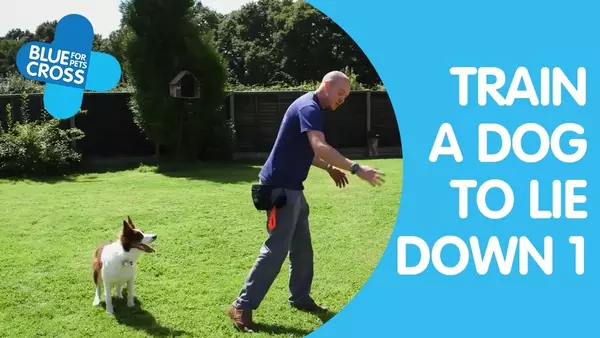
How to teach your dog the down position
Once your dog is confidently sitting on command, it’s easy to guide your dog to the down position.
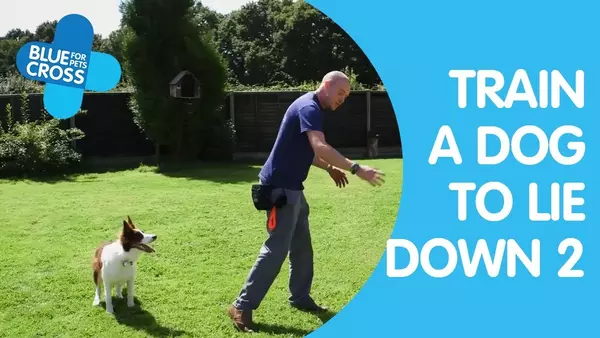
- Place your hand just under the dog's chin near to the chest. Then lower your hand to the floor.
- When your hand is on the floor, slowly draw your hand forward and the dog will follow it into a down position. As your dog lies down, mark the behaviour and reward.
- As with sit, you can introduce the word when they are reliably offering the down position when you lure them into position.
How to teach your dog to wait or stay
When you have taught your dog to sit and lay down on command, you can extend these exercises to include the dog staying in one place. Ask your dog to sit or go down. Then, instead of giving the reward straight away, wait for a few seconds and say “wait” or “stay”. Reward your dog after this cue.
How to train your dog to walk on a loose lead
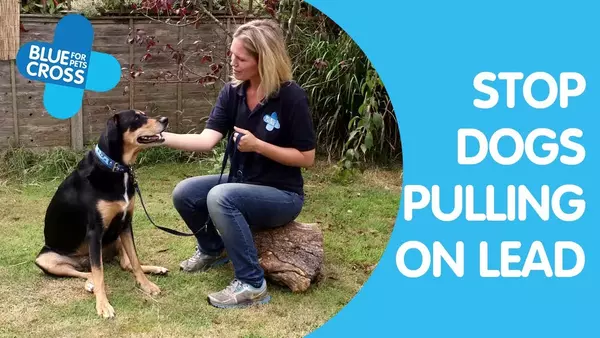
Before you begin training, decide which side your dog will walk on and how far in front of you your dog is allowed to go.
Most dogs that pull have learned to do so over time. The longer they’ve been doing it, the harder it will be for them to learn to walk by your side, so lots of patience will be needed.
- Ask your dog to sit before you start walking. This will help them start training calmly.
- Start walking slowly. As you walk, give your dog lots of verbal praise and a reward for walking next to you.
- If your dog pulls ahead, simply stop walking. Encourage your dog to come back to you with a reward, and start walking again once you’re ready.
This method helps your dog understand that pulling ahead means the treats and walking stop. When they walk calmly alongside you on a loose lead, they’re able to keep moving forwards and are given lots of praise.
Further training
When your dog has learned the basics and learned to work for rewards, you can teach lots of fun and useful things such as go to bed, settle, retrieve and tricks.
You may also want to consider taking part in a dog sport such as agility, scent work or flyball. Even if you do not want to compete in a sport, it's a good idea to keep training your dog regularly - it’s great fun for you both and you’ll be surprised what your dog is capable of learning.
Our behaviour services
We were the first animal welfare charity to employ an animal behaviourist to help people with their pets' problems. Today, our behaviour services help thousands of pets.
Find out more
Page details
Reviewed
• 22 May 2024
Next review
• 21 May 2027


