
XL bully ban explained
In 2023, the government added XL bullies to the dog breed types banned in England, followed by bans in Scotland, Wales and Northern Ireland. If you own an XL bully type dog, you must comply with restrictions.
XL bully types are now classed as banned dangerous dogs. This means it is illegal to breed, sell, advertise, exchange, gift, rehome, abandon or allow XL bully type dogs to stray in England and Wales.
If you own a XL bully type you should have a certificate of exemption from the government and comply with additional restrictions including keeping them on a lead and muzzled in public, and having them neutered.
Important
There have been some changes to public liability insurance and to the conditions of your certificate of exemption. This applies to all banned types and not just XL bully types.
From 1 July 2026, it will no longer be a requirement for banned breed dogs to have third party public liability insurance, but you must continue to have valid insurance up to and including 30 June.
From 1 November 2026, you must not leave a child under 12 in close contact with a banned breed dog in a private place, such as a home or garden, without adult supervision. This will be a condition of your certificate of exemption.
What is an XL bully?
An American bully XL, known as an XL bully, is the largest of the American bully types. They are not a registered breed with the Royal Kennel Club in the UK and are a type of dog that has been bred from several different dog breeds.
How is an XL bully ‘type’ defined?
XL bullies are crossbreeds and Royal Kennel Club breed standards do not exist. The government has therefore created its own specifications for the breed, which includes the size of their head and muzzle, their build, and the height and length of their body. Breed name, genetics and parentage are not considered.
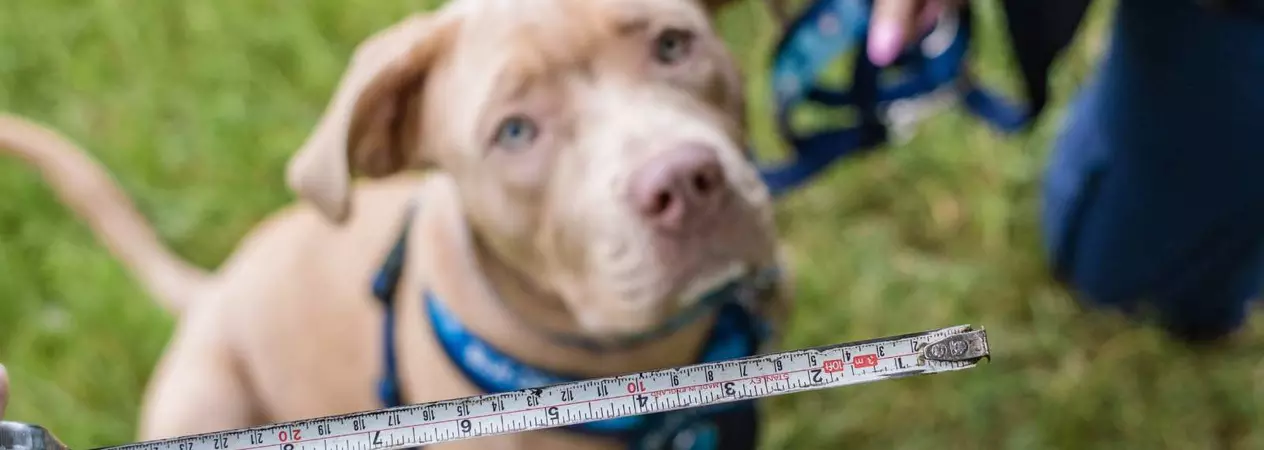
All XL bully types will meet the height requirements. The height should be measured from the ground to your dog’s withers (the top of the shoulders). For adult males this is from 20 inches, and females from 19 inches. Dogs that do not meet this minimum height requirement will not be typed as an XL bully. If they do, they should be assessed against the rest of the specifications.
Note
If your dog is another established breed such as those recognised by the Royal Kennel Club with some similar characteristics to an XL bully, you do not need to worry about the ban, however crossbreeds might be affected.
I own an XL bully
We know that many XL bully type dogs are much-loved family pets. To keep them from being seized, you'll need to make sure:
- you have your certificate of exemption
- your dog is microchipped and neutered
- they are kept on a lead and muzzled in a public place, including in cars
- they are kept in a secure place so they cannot escape
- as of 1 November 2026, they should not be left alone with a child under the age of 12 in a private place without adult supervision
You need to be at least 16 years old to own or walk an XL bully type.
You'll also need to tell Defra if your dog is exported to another country, if your dog passes away or if you move address (except for the permitted 30 days when your dog can be kept at another address within a 12 month period).
Restrictions for XL bully types
Mandatory microchipping
Microchipping is required for all dogs by law. Check that your name, address and contact details are up to date.
Proof of neutering for XL bully types
All XL bully types must have been neutered. Proof of neutering must have been supplied as part of your exemption process.
Changes to third party public liability insurance cover
When the XL bully ban came into force, Dogs Trust provided third party insurance for XL bully types through their membership scheme. They have also provided this for other banned types, including pitbulls. After 30 June 2026, Dogs Trust will no longer be able to provide new third party liability insurance policies, or renew policies.
This means that from 1 July 2026, you’ll no longer be required take out annual third party liability insurance for your dog. You must continue to have valid insurance up to and including 30 June for your certificate of exemption to be valid. If you already have a Dogs Trust policy, this will continue until its expiry date.
When will my dog’s insurance end?
Dogs Trust will stop issuing new insurance policies, and stop renewing existing insurance policies, for banned types after 30 June 2026.
If your policy is renewed on or before 30 June, it will run for its usual 12 month term from the renewal date. If your policy already runs beyond 30 June (for example until January 2027), it will remain valid until the policy’s natural expiry.
Should I renew my insurance if it expires before 30 June?
Yes. You must have valid insurance until 30 June for your certificate of exemption to be valid. If your renewal date falls before 30 June, the insurance policy must be renewed for your certificate to be valid. Once you renew, your Dogs Trust policy will run for its full 12 month term.
Can I still get insurance for my dog?
No other insurers currently offer third party public liability insurance for banned breed dogs. After 1 July 2026, it will no longer be possible to take out third party liability insurance.
Why is Dogs Trust no longer providing third party liability insurance?
As a charity, Dogs Trust has said it is no longer sustainable to offer this insurance.
Where can I find further help and advice?
We recommend you visit Dogs Trust’s website for the latest information on insurance. If you have a question about your exempted dog, please contact Defra. Owners in Scotland should contact the Scottish government, and owners in Northern Ireland should contact DAERA, for more information.
Safety around children
Defra will be introducing a new condition aimed at protecting children from banned breed dogs in the home. Under these conditions, from 1 November 2026, you must not leave a child under 12 in close contact with a banned breed dog in a private place, such as a home or garden, without adult supervision. This will be a condition of your certificate of exemption.
Defra have said that they will provide all dog owners who have an exemption certificate with further guidance before the condition comes into effect.
Muzzle training
Your dog needs to wear a muzzle when out in public, including in cars, and be walked on a lead at all times.
We know that many dogs may struggle to feel comfortable wearing a muzzle out and about. Make sure you continue to use positive reward-based training at home and in public, so that your dog builds their confidence wearing a muzzle and it continues to be a fun experience.
More advice on muzzle training
Keeping your dog on lead
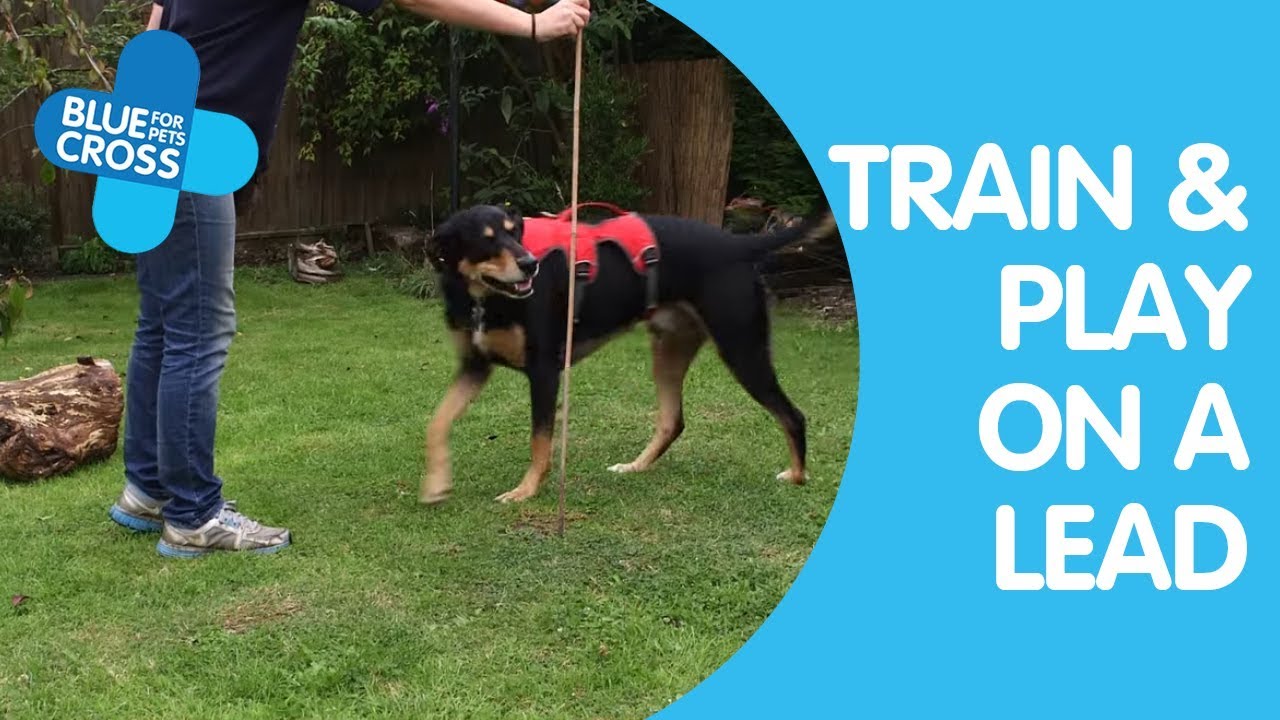
Your dog must be kept on a lead in public places and must be held by someone at least 16 years old. The law does not say how long your lead needs to be, but your dog must be in control. Long leads may be interpreted as breaking the terms of your exemption.
Remember, it’s not just being out and about that your dog can enjoy. We’ve got lots of enrichment ideas for your dog at home and in a secure garden.
Hiring private fields
The Crown Prosecution Service has issued guidance that XL bully types can be exercised in private grounds, paddocks or other places not accessed by the public in general. If hiring a field, always check with the venue beforehand.
Breeding XL bully types
It is illegal to breed from, sell, abandon and give away an XL bully type.
Speaking to your housing provider
Many councils and housing associations do not allow dogs that fall under the Dangerous Dogs Act, even if they have proved to the court that they are not a danger to the public. Some housing associations have confirmed they will allow exempted XL bully types.
Check with your landlord, housing association or council to find out their policies following the ban.
Important
If your dog is seized do not sign anything unless you fully understand the contents of the document and what it relates to.
What’s the process for exempting an XL bully type?
It is illegal to own an XL bully type without a certificate of exemption in all four UK nations. This means your dog is at risk of being seized and kennelled by the police.
When the ban was first introduced, owners were able to apply for an exemption certificate themselves for pets they already owned. This scheme has now closed.
If seized, the police will determine whether your dog is a banned type based on a series of physical characteristics. You’ll then need to go to court to exempt your dog and prove that they are not a danger to the public.
What are the legal routes for exempting a dog?
The legal route for exempting your dog involves going through a lengthy assessment in the courts. This is also likely to be expensive.
Unless you can prove that the dog is not a danger to public safety and that you are a fit and proper person to own the dog, it’s likely the court will rule in favour of destruction (putting your dog to sleep).
If your dog is seized, the police may decide to prosecute you in one of two ways:
- An offence under Section 1 which makes it illegal to own one of the banned breed types. You may be entitled to legal aid if prosecuted under Section 1. If convicted, sentencing could lead to an unlimited fine and/or up to six months in prison.
- Issue an application under Section 4B which is a civil provision where you apply for exemption through the courts. You will not be entitled to legal aid under Section 4B so you will have to self fund, however there is no sentencing if you lose your case. In both instances, your dog will be destroyed (put to sleep) if you lose your case.
Your dog may be released until any trial on the interim exemption scheme under certain conditions. You will need to have already neutered your dog and have third party liability insurance as a minimum if you are hoping your dog will be permitted to be released.
You’ll then need to go to court to exempt your dog and prove that they are not a danger to the public. This will involve a thorough assessment process of your dog’s past behaviour and temperament. You will also be assessed to check whether you are a fit and proper person to keep the dog.
What happens if I get my dog exempted through the courts?
You’ll need to pay for your exemption certificate which costs £92.40 and will last for the dog’s lifetime. You’ll also need follow the other restrictions in place.
Can my dog leave the exemption scheme?
The government has confirmed that there will be a way of leaving the exemption scheme if you applied for exemption as a precautionary approach.
We are waiting for more details from Defra on this process. If you decide to leave the exemption scheme, it’s unlikely your fee will be refunded.
What about unowned dogs?
The Dangerous Dogs Act makes it illegal to own a banned type unless they are exempt, but it also makes it illegal to breed from, rehome or sell these dogs. We continue to be concerned that the Dangerous Dogs Act penalises innocent dogs.
Charities like ours cannot rehome XL bully types, even when they're well behaved and well socialised.
Page details
Reviewed
• 9 June 2026
Next review
• 8 June 2029